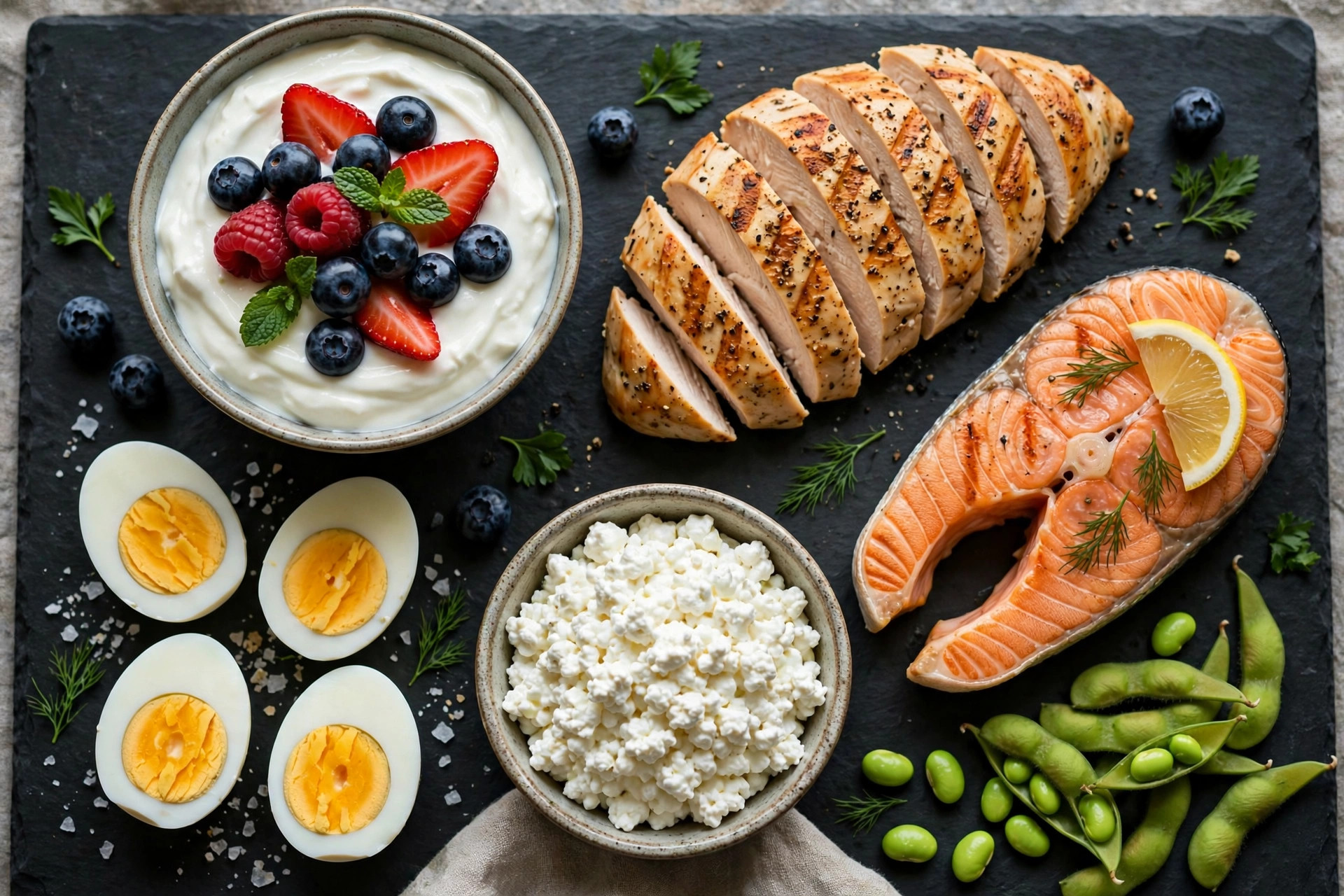
The short answer
How much protein on GLP-1? Aim for 0.8 to 1 gram of protein per pound of your goal body weight each day. If your goal weight is 150 lbs, that's 120–150g of protein daily.
Want your exact number? Use our free GLP-1 protein calculator — it takes 30 seconds and adjusts for your GLP-1 phase.
Why protein is the #1 concern on GLP-1
GLP-1 medications (like Ozempic, Wegovy, and Mounjaro) work by suppressing your appetite — which is great for weight loss, but creates a real nutritional problem. When you're eating far less food overall, every bite has to work harder.
The biggest risk? Muscle loss. Rapid weight loss without enough protein can strip away lean muscle along with fat. Less muscle means a slower metabolism, less strength, and a higher chance of regaining the weight later. Studies on GLP-1 weight loss consistently show that preserving lean mass comes down to two things: enough protein and resistance training.
That's what makes figuring out how much protein on GLP-1 so important — it's not a nice-to-have, it's the lever that determines whether you lose mostly fat or lose muscle too.
Why hitting your protein target on GLP-1 is harder than it sounds
Knowing the number is the easy part. Actually eating that much protein with a GLP-1-suppressed appetite is where most people struggle:
- Smaller portions. You get full fast. A chicken breast that used to be one meal might now be three.
- Nausea. Especially in the early weeks or after dose increases, the thought of a heavy protein meal can be unappealing.
- Food aversions. Many GLP-1 users report going off meat, eggs, or rich foods they used to love.
- Forgetting to eat. Without hunger cues, it's easy to accidentally skip meals and end the day at 40g of protein.
The strategies below are built specifically for these realities — not generic "eat more chicken" advice.
Find your exact protein number
Your target depends on your goal weight, activity level, and where you are in your GLP-1 journey. Our free calculator does the math and splits it across 5 small GLP-1-friendly meals.
Calculate my protein target →5 practical tips for hitting your protein target on GLP-1
1. Eat protein first, always
At every meal, eat the protein portion before anything else. With a small appetite, you might not finish the meal — so make sure what you do eat counts the most. Protein first, vegetables second, carbs last.
2. Split it across 5 small meals
Forget three big meals. Five mini-meals of 20–30g of protein each is far more achievable on GLP-1 than trying to pack 40g into a single sitting. Think: breakfast, mid-morning snack, lunch, afternoon snack, dinner.
3. Choose easy-to-digest proteins
When your stomach is sensitive, reach for gentle options: Greek yogurt, cottage cheese, egg whites, canned tuna, and soft-cooked chicken. These deliver high protein per bite without sitting heavy. Our GLP-1 recipe collection is built around exactly these foods.
4. Have a nausea-day plan
Don't try to hit 130g on a day you feel sick — aim for damage control instead. Keep it bland, cold, and tiny: a few spoonfuls of Greek yogurt, scrambled egg whites, or sips of a simple protein shake every couple of hours. Something is always better than nothing.
5. Track it (at least at first)
You can't fix what you don't measure. Track your protein for two weeks using any free app — most GLP-1 users are shocked at how far short they fall. Once you know your patterns, you can stop tracking and eat on autopilot.
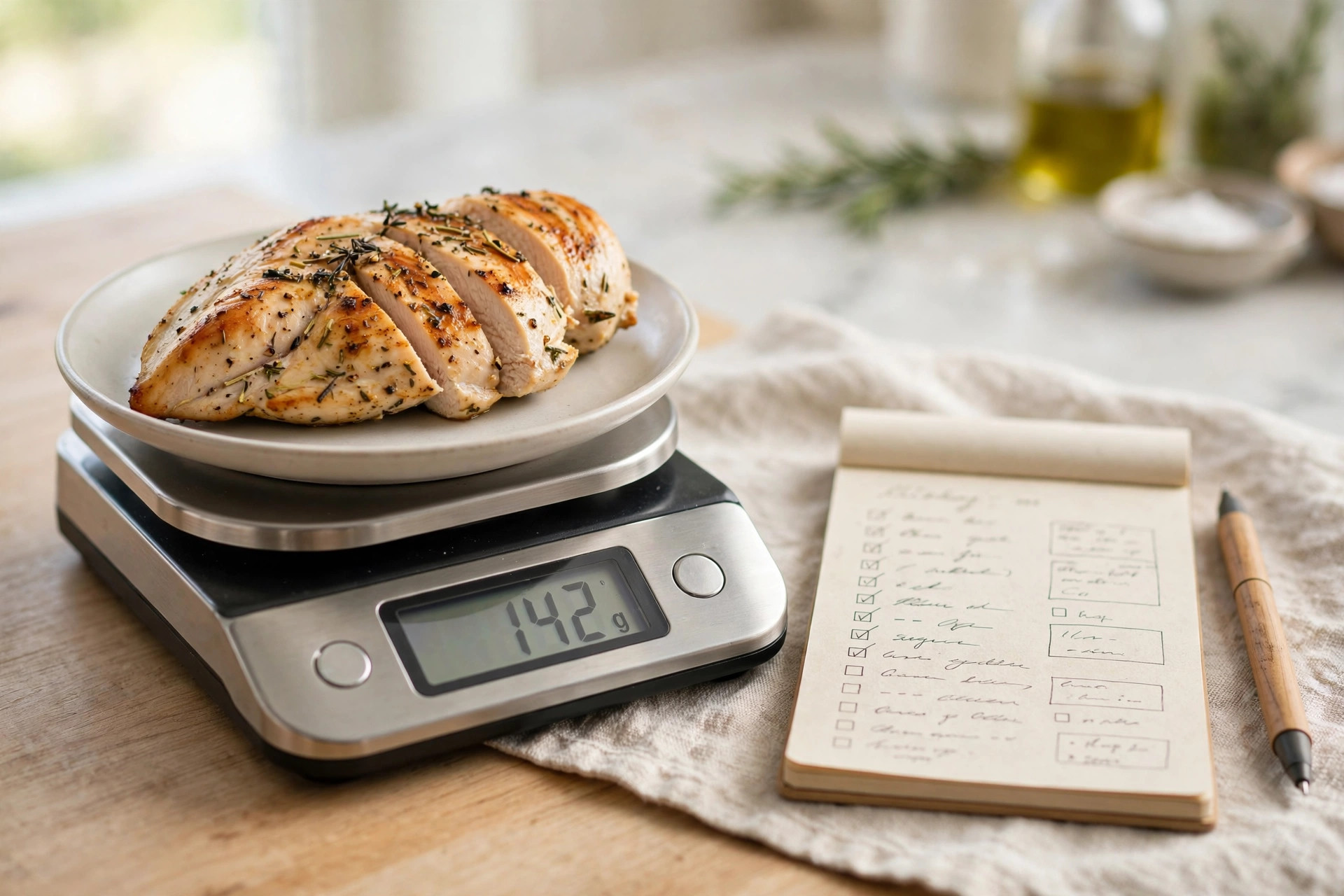
What 100g of protein looks like in a day on GLP-1
Numbers are abstract. Here's what a realistic 100g+ day looks like using our 3-ingredient recipes — five small meals, nothing complicated:
| Meal | What | Protein |
|---|---|---|
| Breakfast | Greek Yogurt Power Bowl — Greek yogurt, berries, honey | 20g |
| Mid-morning | Egg White Spinach Scramble — egg whites, spinach, feta | 18g |
| Lunch | Tuna Cucumber Boats — tuna, Greek yogurt, cucumber | 25g |
| Afternoon | Cottage Cheese Protein Pancakes (half batch) — cottage cheese, oats, eggs | 20g |
| Dinner | Chicken Lettuce Cups — chicken, Greek yogurt, lettuce | 25g |
| Total | 5 small meals, all 3 ingredients each | 108g |
That's 108g of protein across five small, easy meals — no protein powder required. For plant-based eaters, swap in our Smoky Tempeh Bites (20g) for any meal. Browse all 30+ three-ingredient recipes to build your own rotation.
Get the free 3-Day GLP-1 Protein Starter Plan
Want this done for you? Our free 3-day plan maps out every meal with protein counts, a one-trip shopping list, and nausea-day swaps — built from the recipes above.
How much protein on GLP-1: questions, answered
Can you build muscle on GLP-1?
Yes, but it takes deliberate effort. GLP-1 medications suppress appetite, which can lead to undereating protein — and without enough protein plus resistance training, the body may lose muscle along with fat. Hitting 0.8–1g of protein per pound of goal body weight daily and doing strength training 2–3 times per week gives you the best shot at preserving and building muscle while losing weight.
What happens if you don't eat enough protein on GLP-1?
Undereating protein on GLP-1 can lead to muscle loss, slower metabolism, hair thinning, fatigue, and weaker immune function. Because rapid weight loss on these medications can include significant muscle loss, protein intake is the single most important nutritional lever you control. Talk to your doctor if you're consistently falling short.
What's the best protein source on GLP-1?
The best protein sources on GLP-1 are easy to digest, not too heavy, and high in protein per bite: Greek yogurt, cottage cheese, eggs and egg whites, canned tuna, shredded chicken, and tempeh for plant-based eaters. Soft textures and mild flavors tend to sit better when appetite is suppressed or nausea is an issue.
Should I use protein powder on GLP-1?
Protein powder can help fill gaps on GLP-1, especially on days when solid food feels like too much. Look for a simple whey or plant-based powder with 20–25g protein per serving and minimal added sugar. But whole-food protein sources should be your foundation — powder is a backup, not the plan. Check with your doctor before adding supplements.
How do I eat enough protein when nauseous on GLP-1?
On nausea days, go small, bland, and cold: a few spoonfuls of Greek yogurt, scrambled egg whites, a quarter of a tuna cucumber boat, or sips of a simple protein shake. Eat protein first in tiny portions every 2–3 hours rather than forcing a full meal. If nausea is persistent or severe, talk to your prescribing doctor.
How much protein on GLP-1 per day?
A common starting target is 0.8 to 1 gram of protein per pound of goal body weight per day. For example, if your goal weight is 150 lbs, aim for 120–150g of protein daily. Use our free GLP-1 protein calculator to get your personalized number, and confirm it with your doctor.
More from WellNest
- GLP-1 Protein Calculator — find your exact daily protein target in 30 seconds, split across 5 small meals.
- High-Protein GLP-1 Recipes — 17 protein-first recipes built for suppressed appetites, sorted by protein.
- How Long Does Raw Chicken Last? — USDA-backed fridge and freezer times plus the safety rules that keep you healthy.
Get the free 3-Day GLP-1 Starter Plan
Join the WellNest newsletter and get the 3-day protein plan with shopping list — free, always.