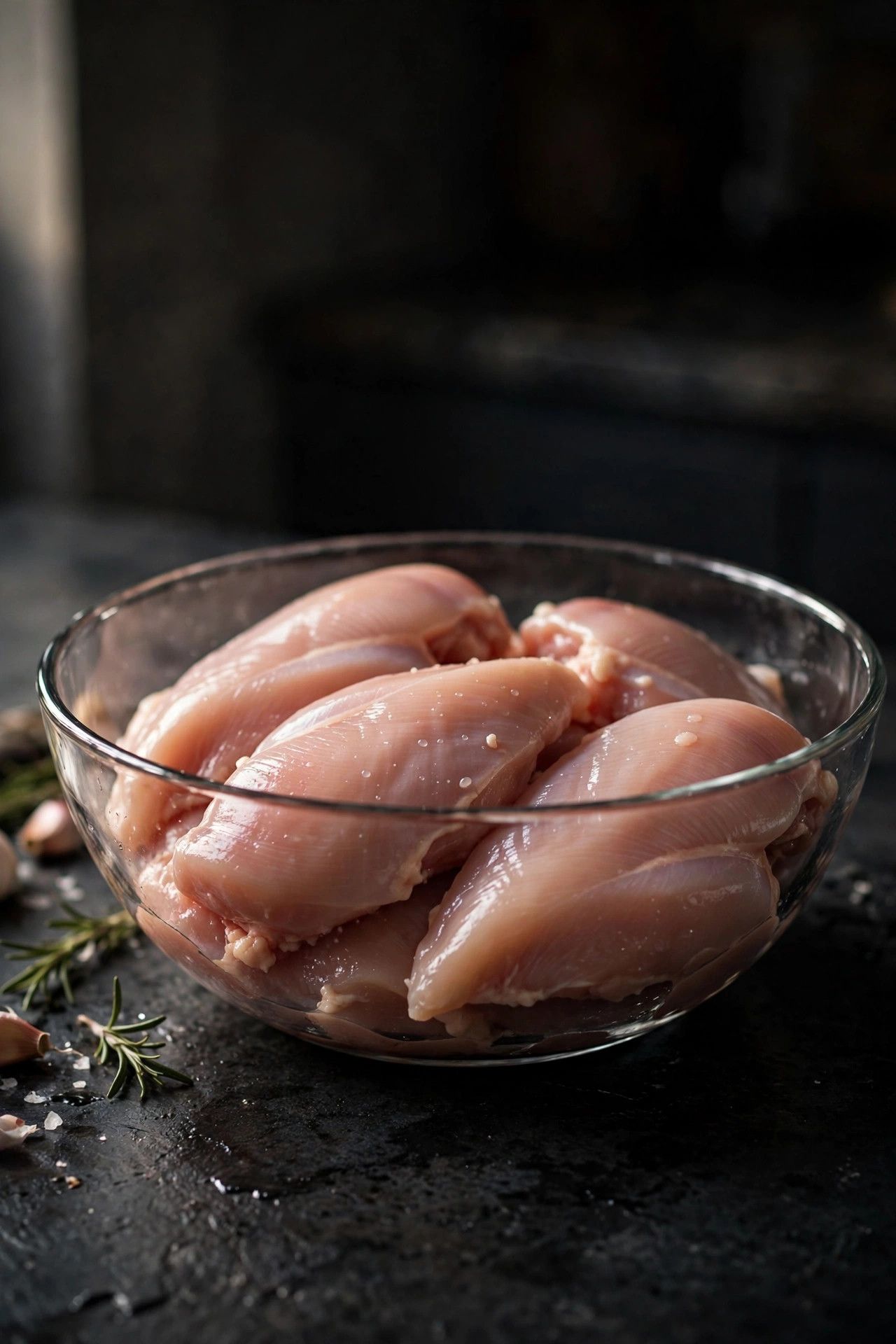
It's Thursday. You bought chicken on Sunday. Now you're staring at it, sniffing the package, wondering: is this still okay?
Chicken causes more fridge anxiety than almost any other food. And for good reason — raw chicken is one of the most common sources of food poisoning in American kitchens. Salmonella and Campylobacter don't announce themselves. There's no warning label that says "I'm unsafe now."
But the rules are actually simple. The USDA has clear numbers, and once you know them, the guesswork ends. Here's everything: how long raw chicken lasts in the fridge and freezer, how to spot the spoilage signs, and how to store it so nothing goes to waste.
The quick answer: the numbers
Per the USDA Food Safety and Inspection Service (FoodKeeper guide and cold-storage chart):
| Chicken type | Fridge (40°F or below) | Freezer (0°F or below) |
|---|---|---|
| Raw chicken pieces breasts, thighs, legs, wings |
1–2 days | 9 months |
| Whole raw chicken | 1–2 days | 12 months |
| Raw ground chicken | 1–2 days | 3–4 months |
| Cooked chicken leftovers | 3–4 days | 2–6 months |
Those freezer times are for quality, not safety — food kept at 0°F stays safe past them, it just starts tasting like the freezer. The fridge numbers are the hard line: at day 2, cook it or freeze it.
The golden rule: if you're not cooking it within 2 days of buying, freeze it on day one. Freezing early locks in quality and buys you months.
How to tell if it's gone bad
Use your senses — look, smell, and touch. And one iron rule: never taste raw chicken to check if it's safe. If the other signs are ambiguous, tasting won't settle it — it can only make you sick.
Look. Fresh chicken is pink with white fat. Watch for grey or dull color, or yellowish patches on the skin. A little color change right under the plastic wrap is often just oxidation — but widespread grey is a bad sign.
Smell. Fresh raw chicken smells like almost nothing. If you notice a sour, sulfur-like, or "off" smell that hits you as soon as you open the package, it's done. Trust your nose — it evolved for exactly this.
Touch. Raw chicken is naturally a bit slippery. But a thick, slimy film that stays on your fingers after a rinse is a red flag. That's bacterial buildup, and it means toss it.
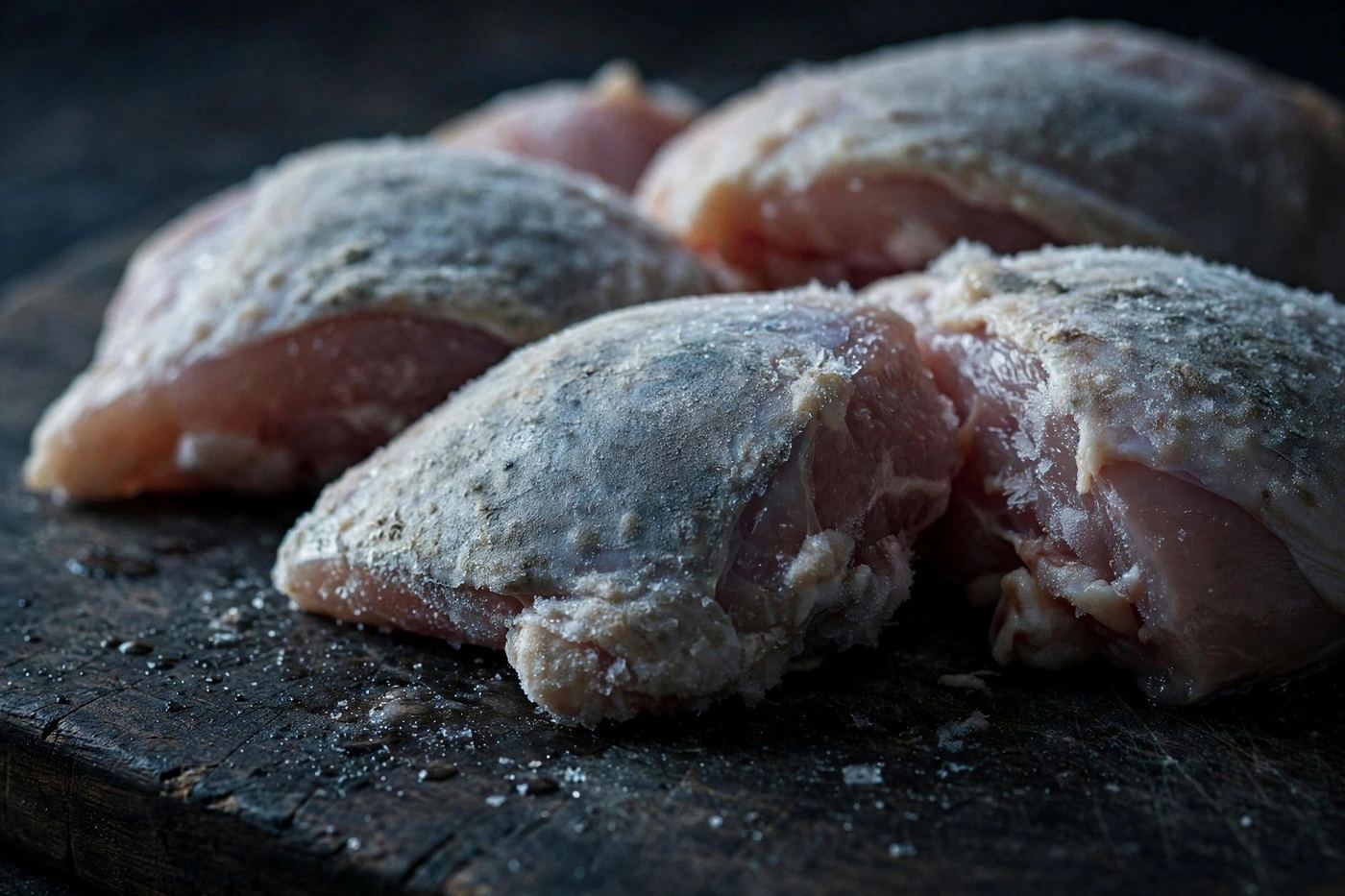
The decision flow: still within 2 days in the fridge and passes all three checks? Cook it. Past 2 days, or any check fails? Throw it out. Don't try to "save" it by cooking it extra well — some bacteria leave behind heat-proof toxins.
Food safety notes
These are the USDA-grounded rules that keep chicken safe from the store to your plate:
- Keep the fridge at 40°F or below. Bacteria multiply fast in the "danger zone" between 40°F and 140°F. An inexpensive fridge thermometer ends the debate.
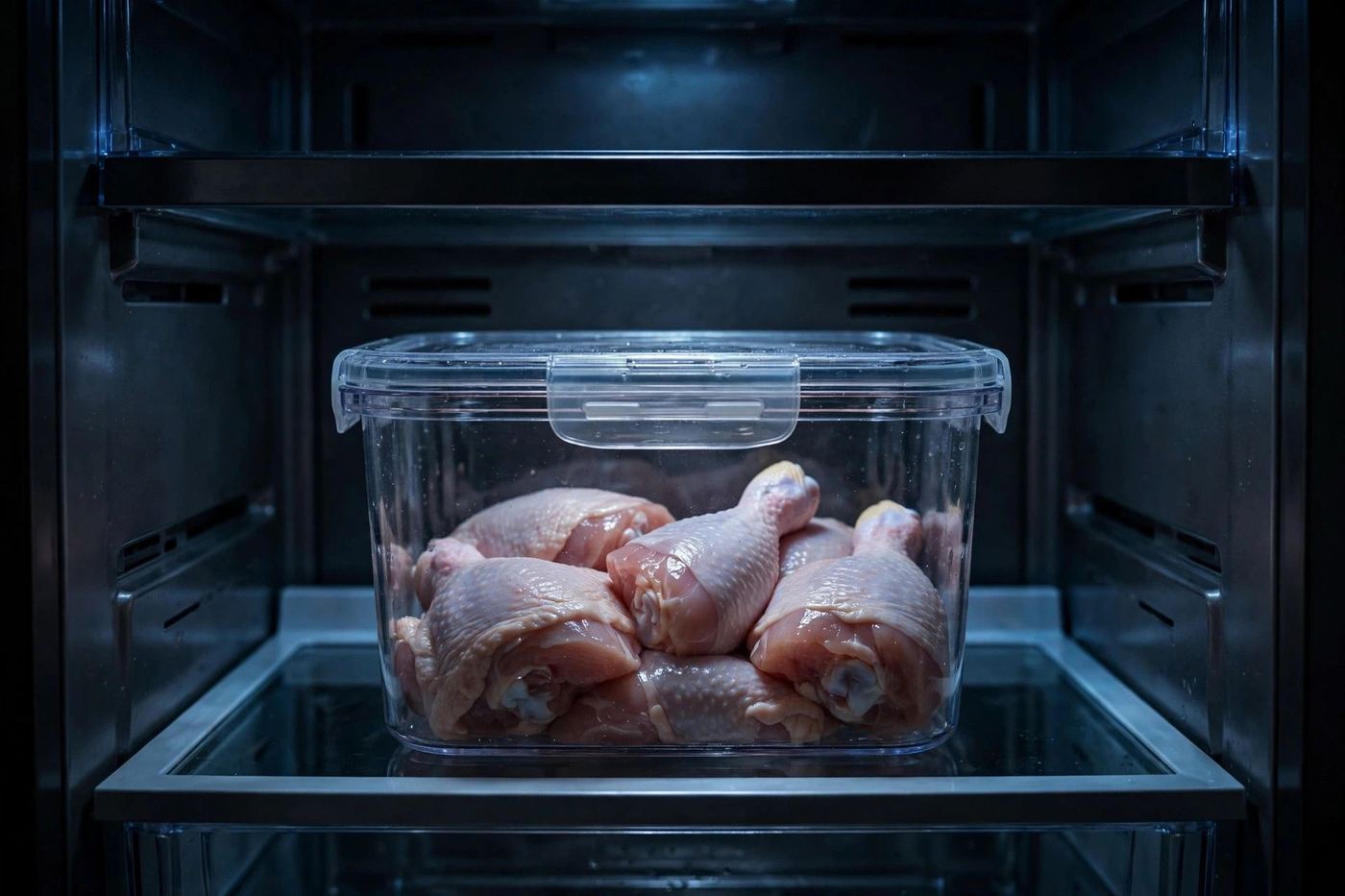
- Bottom shelf, always. Store raw chicken on the lowest shelf in a leak-proof container or tray, so drips can't contaminate food below it.
- Don't wash raw chicken. The USDA says rinsing spreads bacteria around your sink and counters in water droplets — cooking is what makes it safe, not washing.
- Cook to 165°F. The whole piece, measured at the thickest part with a food thermometer. Color isn't a reliable guide — pink near the bone can still be fully cooked, and fully white can still be under 165°F.
- Thaw safely. In the fridge (24 hours for most pieces), in cold water changed every 30 minutes, or in the microwave — never on the counter. Chicken thawed in cold water or the microwave should be cooked immediately.
- When in doubt, throw it out. Food poisoning is never worth the price of a chicken breast. This is the one rule that overrides everything else.
Use it before it goes
Day 2 is approaching and you still have chicken to use? Here are three fast ideas that turn it into dinner tonight:
- Grill it simple. Olive oil, lemon, salt, garlic — 6–8 minutes per side over medium heat. Slice over a big salad or pair with a grain bowl.
- Stir-fry it. Thin strips cook in under 10 minutes with whatever vegetables are also looking tired in your fridge.
- Make soup. Shredded chicken in broth stretches into two meals, and the soup freezes beautifully for later.
Portion leftovers into 1- to 2-cup servings — they cool faster and reheat more evenly than one big block. And if you bought chicken on impulse and don't need it this week, freeze it today: you can always decide what to make later.
Don't have chicken on hand? Find the exact substitute here →
For side dishes and sauces to go with tonight's chicken, browse the WellNest recipe collection.
Keep it fresh longer: one storage pick
Airtight storage is half the battle. Raw chicken on a plate loosely covered with foil leaks, drips, and picks up fridge odors — and a leaking container contaminates everything below it. Our pick: the container set buyers rate highest for a true airtight seal.
Rubbermaid Brilliance Food Storage Containers, Set of 5 (10 Pieces)
Best for: airtight, leak-proof fridge and freezer storage
The latch-and-gasket seal is the real story here: thick rubber gasket, snap latches, genuinely 100% leak-proof. Raw chicken goes in, juices stay in, nothing drips onto the shelf below. The crystal-clear Tritan plastic is stain- and odor-resistant, and the set goes from fridge to freezer to microwave.
What buyers love
- Airtight seal you can hear — snap the latches and the gasket seats with an audible pop.
- Zero leaks — the number-one reason buyers switch from their old containers.
- Crystal-clear walls, so you can see what's inside without opening.
- Freezer-safe, microwave-safe, and dishwasher-safe — one set for everything.
What buyers complain about
- Latches can feel stiff at first — they loosen with regular use.
- Costs more than basic grocery-store containers — you're paying for the seal.
Specs: 5 containers + 5 lids · BPA-free Tritan · leak-proof latches with gasket seal · stain- and odor-resistant · freezer, microwave, and dishwasher safe.
Check price on Amazon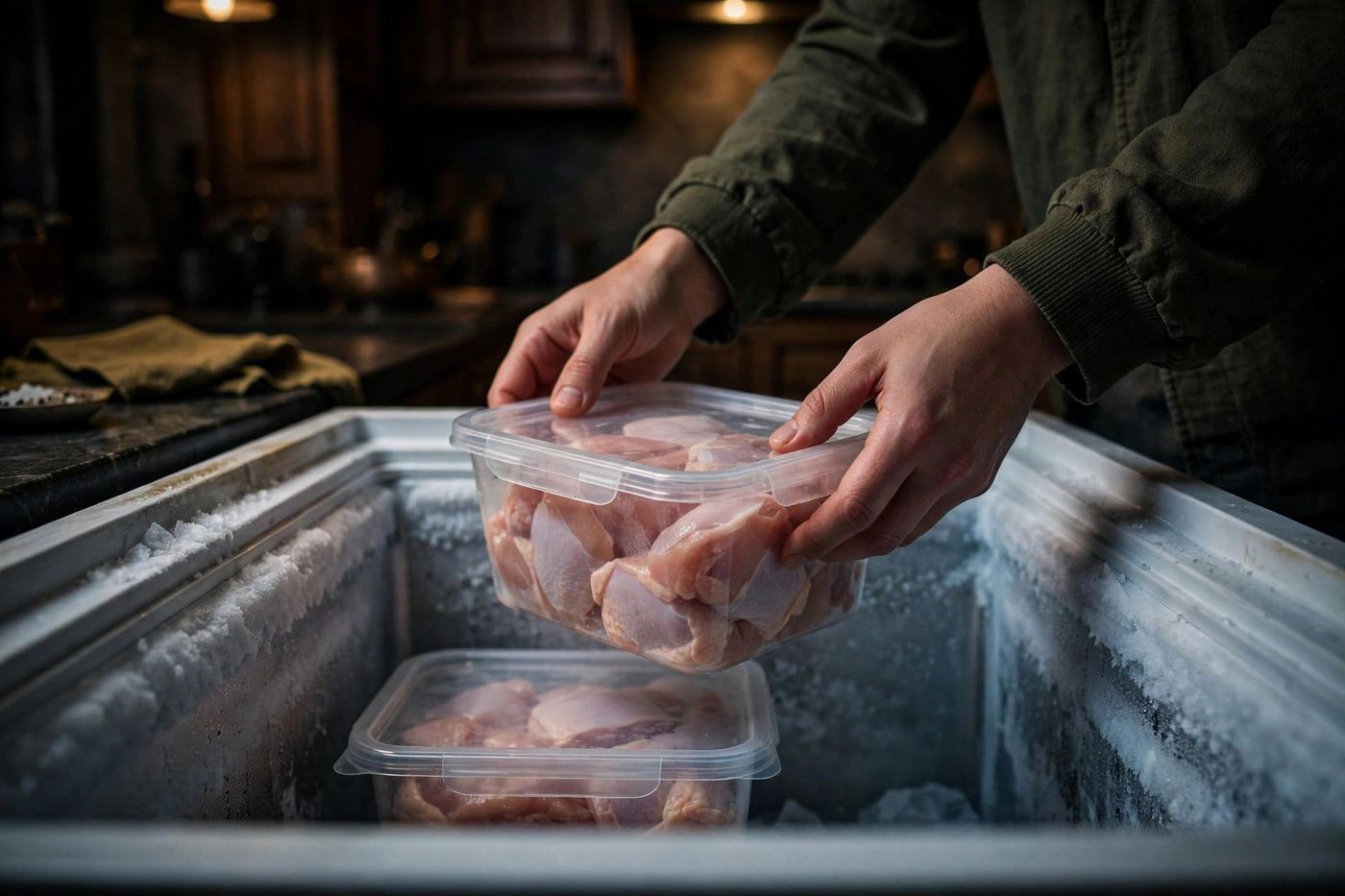
Questions, answered
Can you freeze raw chicken?
Yes. Freeze raw chicken pieces for up to 9 months and a whole chicken for up to 12 months for best quality, per the USDA. Use freezer-safe wrap or airtight containers, squeeze out extra air, and freeze within 1–2 days of buying — freezing early is what preserves quality.
How do you know if raw chicken is bad?
Check three things: look (dull grey instead of pink), smell (a sour or sulfur-like odor — fresh chicken smells like almost nothing), and touch (a slimy film that stays after rinsing). If any check fails, or it's been in the fridge longer than 2 days, throw it out. Never taste it to check.
What happens if you eat expired raw chicken?
You risk food poisoning from bacteria like Salmonella or Campylobacter — stomach cramps, diarrhea, and vomiting that can show up within hours to days. That's why the USDA rule is simple: 1–2 days in the fridge, then cook or freeze. When in doubt, throw it out.
Storage times sourced from the USDA Food Safety and Inspection Service: the FoodKeeper guide and the USDA Cold Food Storage Chart.
More from WellNest
- The Best Magnesium for Sleep — the magnesium picks buyers rate for winding down: glycinate, citrate, and which form to pick.
- The Best Matcha Whisk Set for Café-Smooth Matcha at Home — the whisk sets real buyers love for frothy, clump-free matcha in two minutes.
- The Best Popsicle Molds for Healthy Homemade Pops — the molds that release easily, survive the freezer, and make healthy 3-ingredient pops effortless.
Healthy recipes, in your inbox
Join the WellNest newsletter — new recipes and guides, straight to your inbox. Free, always.
Join free