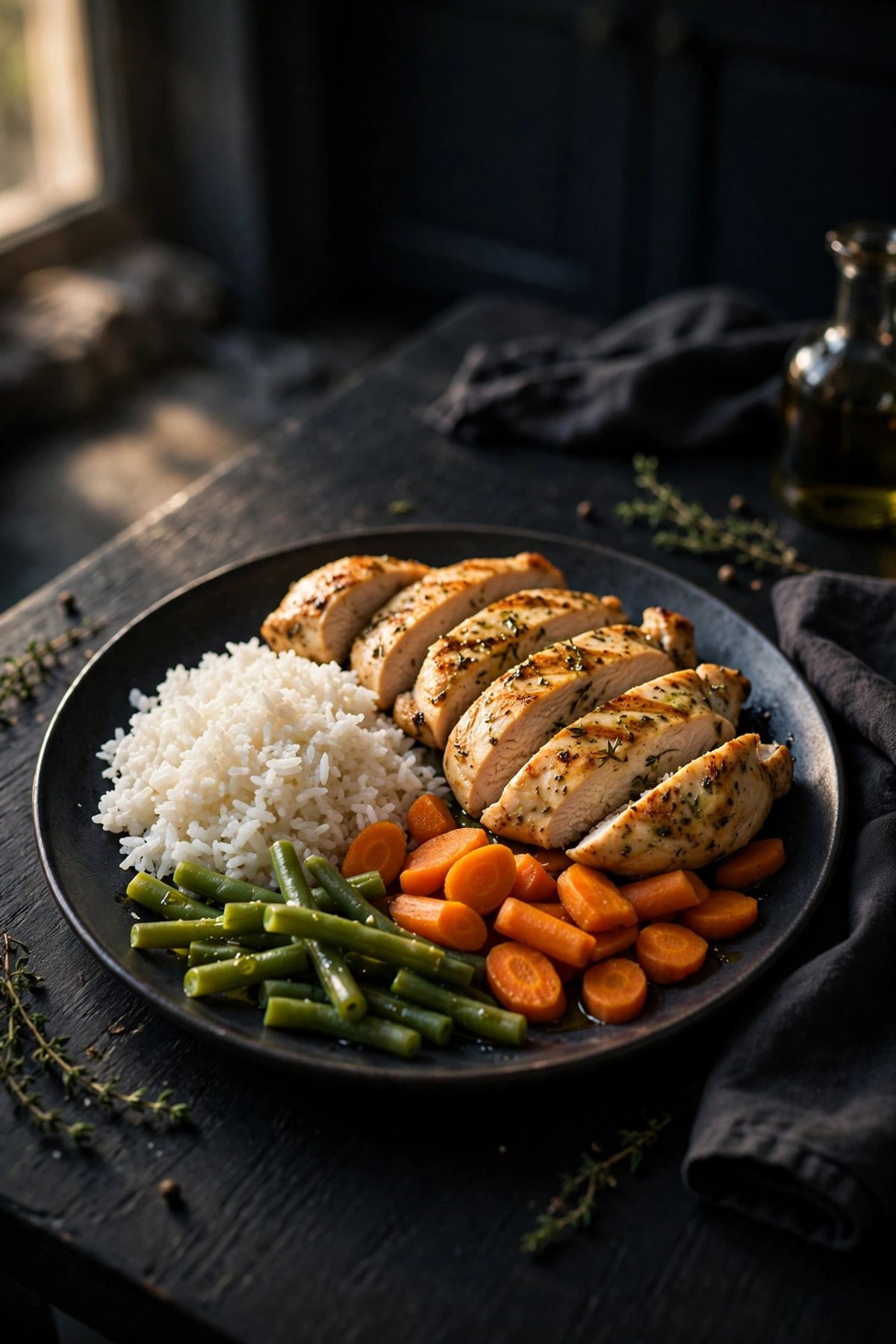
You eat a normal dinner. Nothing wild, nothing huge. An hour later your stomach feels tight, full, and loud.
That pattern is why many people look up this diet. The food itself can be healthy. The problem is how some of its carbs behave in your gut.
This guide is for phase 1, the short elimination phase. The goal is not to fear food. The goal is to lower the ferment load for a while, then test foods back in and learn your own limits.
Why FODMAPs Cause Gas in the First Place
FODMAPs are short-chain carbs found in everyday foods. Your gut does not absorb some of them well. That part is normal, and it happens to everyone to some degree.
What happens next is the key. Gut bacteria ferment those unabsorbed carbs. Fermenting makes gas. In a sensitive gut, a normal amount of gas can feel much worse than it should.
There are five main groups to know. You do not need to memorize them. You just need to spot which group a problem food belongs to.
| FODMAP group | Where it hides | Why it matters for gas |
|---|---|---|
| Fructans | Onion, garlic, wheat | One of the most common gas triggers, and it hides in sauces and stock. |
| GOS | Beans, lentils, chickpeas | Known for fermenting. Portion size changes the effect a lot. |
| Lactose | Milk and soft cheeses | Only a problem if your gut makes less lactase, the enzyme that breaks it down. |
| Excess fructose | Some fruits and sweeteners | Fructose left unabsorbed can ferment further down the gut. |
| Polyols | Mushrooms, some stone fruit, larger servings of cauliflower | Sugar alcohols such as sorbitol and mannitol, also found in sugar-free products. |
This is why one person reacts to beans and another reacts to onion. You may be sensitive to one group and fine with another. Reintroduction is how you find out which.
Foods Most Likely to Cause Gas
These foods are high FODMAP at normal servings in our chart. In phase 1, pause them. This is not a forever list, and it is not a list of bad foods.
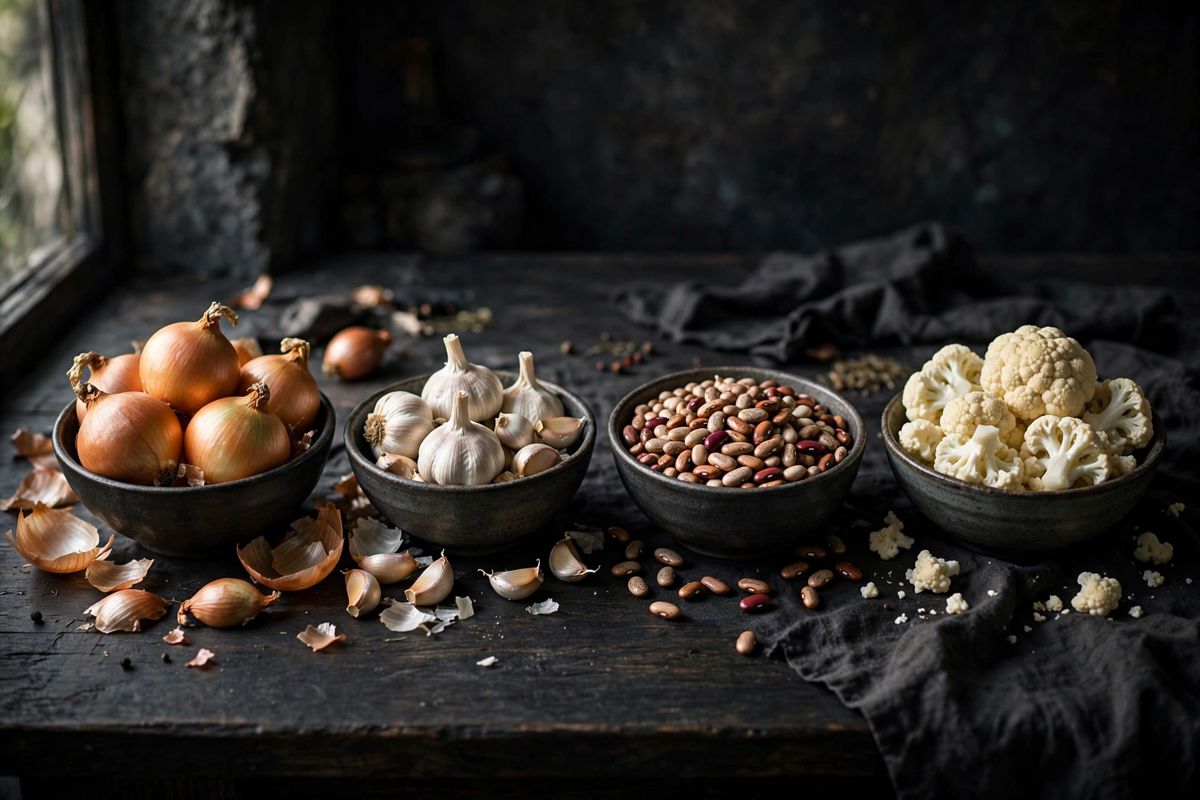
- Onion, all bulb types: high in fructans. It is also the base of most sauces, soups, and ready meals.
- Garlic: also high in fructans. Even a small clove counts when it is in every meal.
- Cauliflower: updated - Monash retested it in 2025, and 3/4 cup is now low FODMAP. Bigger servings can still add up for mannitol, so measure it instead of skipping it.
- Button mushrooms: also listed for mannitol. Oyster mushrooms are the swap, below.
- Asparagus and artichoke: high in our chart at normal servings.
- Celery, full stalk, and leek white bulb: both on the high list at normal servings.
- Beans, lentils, and chickpeas in large servings: classic GOS foods. Many people find a large serving is the issue, not a spoonful.
Check labels as well as plates. Onion and garlic powder hide in stock cubes, spice mixes, dressings, and sauces. If gas keeps showing up, the hidden base is often why.
Sugar-free gum and mints are worth a look too. Many use sorbitol or other polyols. They are small, but they can add to the same total.
Foods That Are Usually Gentler
Phase 1 is not an empty plate. These foods are low FODMAP at the servings in our chart. Build most meals from this list while you test.
| Food | Safe serving | Good to know |
|---|---|---|
| Carrots | 1-2 medium | A simple base, raw or cooked. |
| Cucumber | 1/2 cup+ | Good in salads and simple sides. |
| Green beans | 15 beans (about 3/4 cup) | A plain, easy side dish. |
| Baby spinach | 1 cup | Works raw or wilted into warm food. |
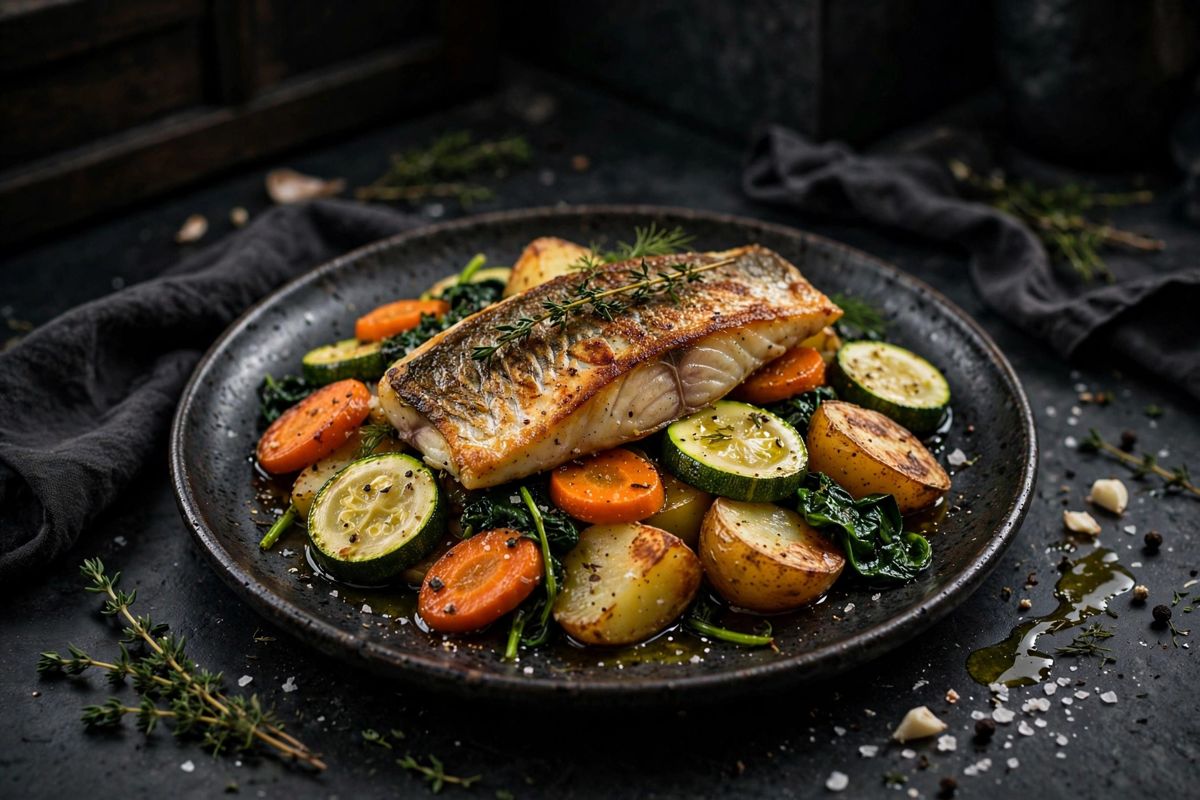
| Zucchini | 1/3 cup sliced | Keep the sliced serving as shown. |
| Potato | 1 medium | A filling base that replaces foods you pause. |
| Lettuce | 1 cup | A simple base for salads and plates. |
| Bok choy | 1 cup | Good in stir-fries and soups. |
| Green bell pepper | 1/2 cup | Green is the gentler pepper here. Red is portion-careful. |
| Broccoli florets | 3/4 cup | Florets only at this serving. Stalks are portion-careful. |
| Green cabbage | 3/4 cup shredded | Use shredded, cooked or in slaws. |
| Oyster mushrooms | 1 cup | The mushroom swap for button mushrooms. |
Plain proteins such as eggs, chicken, fish, and plain rice sit well for most people in phase 1. They give the plate bulk without adding FODMAP load.
You can check any other food in seconds in our free FODMAP Food Chart, which covers 221 foods. Our gut health hub has the wider set of guides.
Why Portions and Stacking Matter for Gas
A food can be fine in a small serving and a problem in a big one. Gas is often about total load, not one single bite.
Some foods sit in the middle. In our chart, sweet potato is portion-careful at 1/2 cup, Brussels sprouts at 2 sprouts, and sweet corn at half a cob. Keep those servings in phase 1.
Stacking is the other trap. That is when several middle foods land in one meal and add up. One on its own may be fine for you. Three or four together can mean a rough evening.
- Pick only one portion-careful food per meal in phase 1.
- Fill the rest of the plate from the gentler list above.
- Keep a simple note of what you ate when gas is bad. Patterns show up fast.
- Cook vegetables when your gut feels sensitive. Cooked veg is often easier to handle than a big raw salad.
Eating habits count too. Eating fast and swallowing air can add to the feeling of fullness. Slow down, chew well, and keep meals a normal size while you test.
Swaps That Keep the Flavour
Pausing onion and garlic feels like pausing flavour itself. There are honest workarounds, and they work for a clear reason.
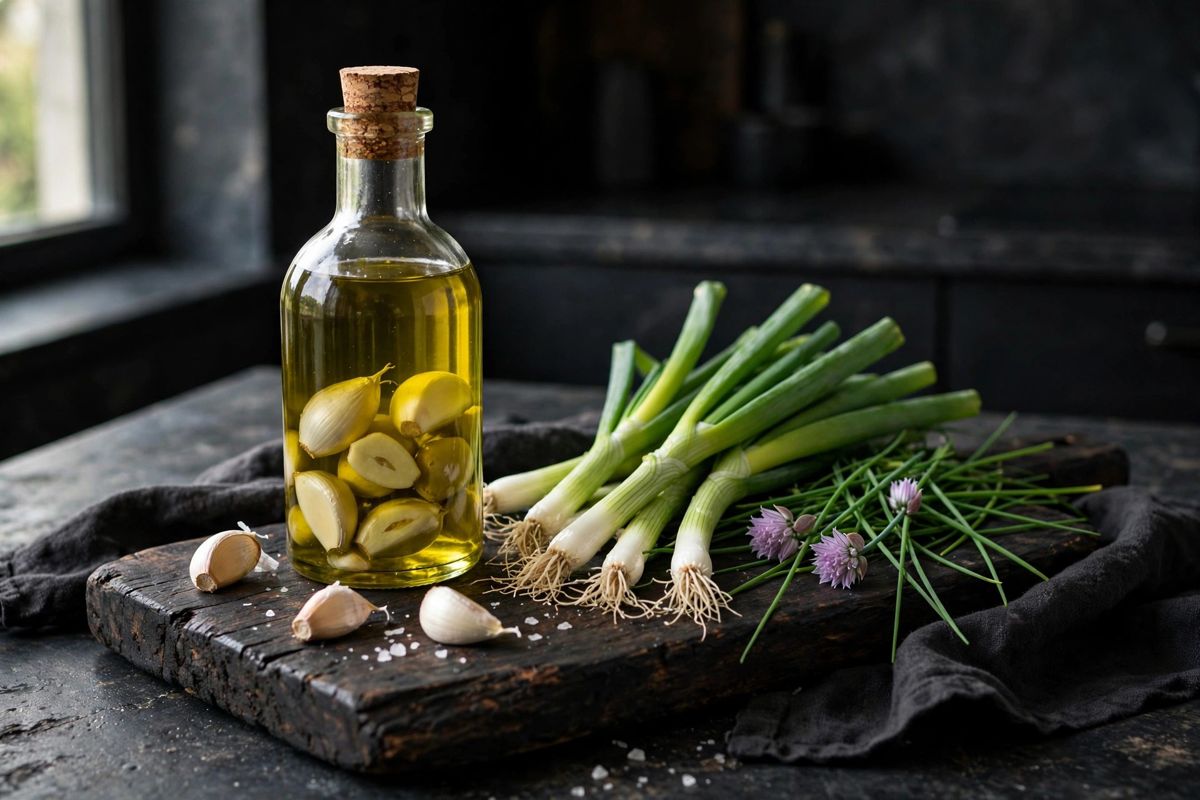
Fructans dissolve in water, not in oil. So garlic-infused oil gives you garlic flavour without the fructans from the clove. The garlic flavours the oil, then it is removed. You cook with the oil only.
For onion flavour, use the green tops of spring onions. The green tops are on the gentler list and can be used in generous amounts. Chives work the same way on a finished dish.
For mushrooms, swap button mushrooms for oyster mushrooms at 1 cup. You keep the soft, savoury texture without using the mushroom on the pause list.
Our full vegetable guide goes deeper on portions: Low FODMAP Diet Vegetables: Safe List + Portions. It is a good next read if vegetables are your main question.
Want this done for you? Meet the Low FODMAP Meal Planner Pro
Built to turn these lists and portions into a plan you can follow
Checking every food, every portion, and every swap for every meal is a lot of work. The planner does that checking for you, using Monash-guided meals and the same portion logic as this guide.
What it does for you
- 52 Monash-guided meals, each with a note explaining why it fits.
- A personal 7-day plan for the elimination phase, with eating-style filters for vegetarian and dairy-free, and food-avoidance filters for eggs, fish and seafood, peanuts and tree nuts, and soy.
- Per-dish swaps that respect your settings, so a swap still fits your plan.
- An auto-generated grocery list, grouped for faster shopping.
Good to know
- It costs $19 once, with no subscription, and a 7-day money-back guarantee.
- It is a planning tool, not medical advice.
A Simple Day on This Plan
You do not need special recipes to start. These WellNest recipes use foods from the gentler list. Keep servings in line with the tables above.
- Egg White Spinach Scramble - baby spinach at 1 cup fits the gentler list.
- Tuna Cucumber Boats - cucumber at 1/2 cup or more is on the gentler list.
- Baked Zucchini Fries - keep your serving at 1/3 cup sliced as listed.
- Chicken Lettuce Cups - lettuce at 1 cup is a simple, gentle base.
Start with a few calm days like this. Note how you feel. Then, when you move to reintroduction, test one paused food at a time so the answer is clear.
Two Small Supports
The planner above is the main tool. These two items are just supports for the ideas in this guide. They are secondary, and you may already own one of them.
Garlic-infused olive oil
This is the classic workaround for garlic flavour in phase 1. Look for an oil that is infused, not one with garlic pieces sitting in it, and check the label before you buy. Use it where you would normally start a pan with garlic.
Check price on AmazonGlass meal-prep containers for portioning
Portions are easier when you can see them. Glass containers help you split cooked vegetables into the servings from the tables above, so lunch the next day stays in line too. Pick a size you will actually use, and check the lids seal well.
Check price on AmazonA note on the diet itself: The low FODMAP diet is a short-term elimination protocol. It is phase 1 of 3, followed by reintroduction and then a personal long-term plan. It is best done with a dietitian. Monash University is the research authority behind it. This approach may help some people work out their triggers, but it is not a cure, and staying in strict elimination for a long time is not the goal.
Questions, answered
Why does a low FODMAP diet help with gas?
FODMAPs are short-chain carbs that are poorly absorbed in the gut. Gut bacteria ferment them, and that fermenting makes gas. Eating less of them for a short time can lower the ferment load, which may help some people feel less bloated and gassy while they work out their triggers.
What foods cause the most gas on a low FODMAP diet?
The most common ones in our chart are onion, garlic, and button mushrooms, plus beans and lentils for many people. Onion and garlic hide in stock, sauces, and spice mixes, so the total can add up even when you do not see them on the plate.
Is cabbage low FODMAP?
Green cabbage is, at 3/4 cup shredded in our chart. Savoy cabbage is different, and sits in the portion-careful group at 1/2 cup. Check which type you have, and keep to the listed serving in phase 1.
Can I ever eat onion and garlic again?
For most people, yes. Phase 1 is a short elimination phase, not a forever rule. In reintroduction you test foods like onion and garlic one at a time, in small amounts, and learn your own limit. Many people find a small amount is fine for them.
How long should I stay in phase 1?
Phase 1 is meant to be short, just long enough to see if your symptoms settle and to get a clear base for testing. It is best done with a dietitian. If nothing changes, staying strict for longer is not the answer. Talk to your clinician or dietitian.
The Whole Nest is here. All 11 WellNest planners, trackers and protein tools in one home - yours to keep, under one key. See The Whole Nest ->
More from WellNest
- Low FODMAP Desserts: Sweet Ideas That Still Fit Phase 1 - dessert fits phase 1 too, with safe fruit portions, dark chocolate, and swaps for honey and ice cream.
- Low FODMAP Diet Vegetables: Safe List + Portions - the full vegetable list, with the portions that decide if a vegetable fits phase 1.
- GLP 1 and IBS: How to Eat When Both Apply - a plain guide to gentle eating when a GLP-1 and IBS overlap, with low FODMAP basics.
- The WellNest Gut Health Hub - our growing set of plain-language guides on IBS, FODMAPs, and calmer digestion.
Got 3 ingredients? Find your recipe
Tell the free WellNest Recipe Finder the 3 ingredients you already have, and it matches you to a real recipe from our verified library. Your match comes with the free finder signup - a fresh 3-ingredient idea in your inbox every week.
 FREE
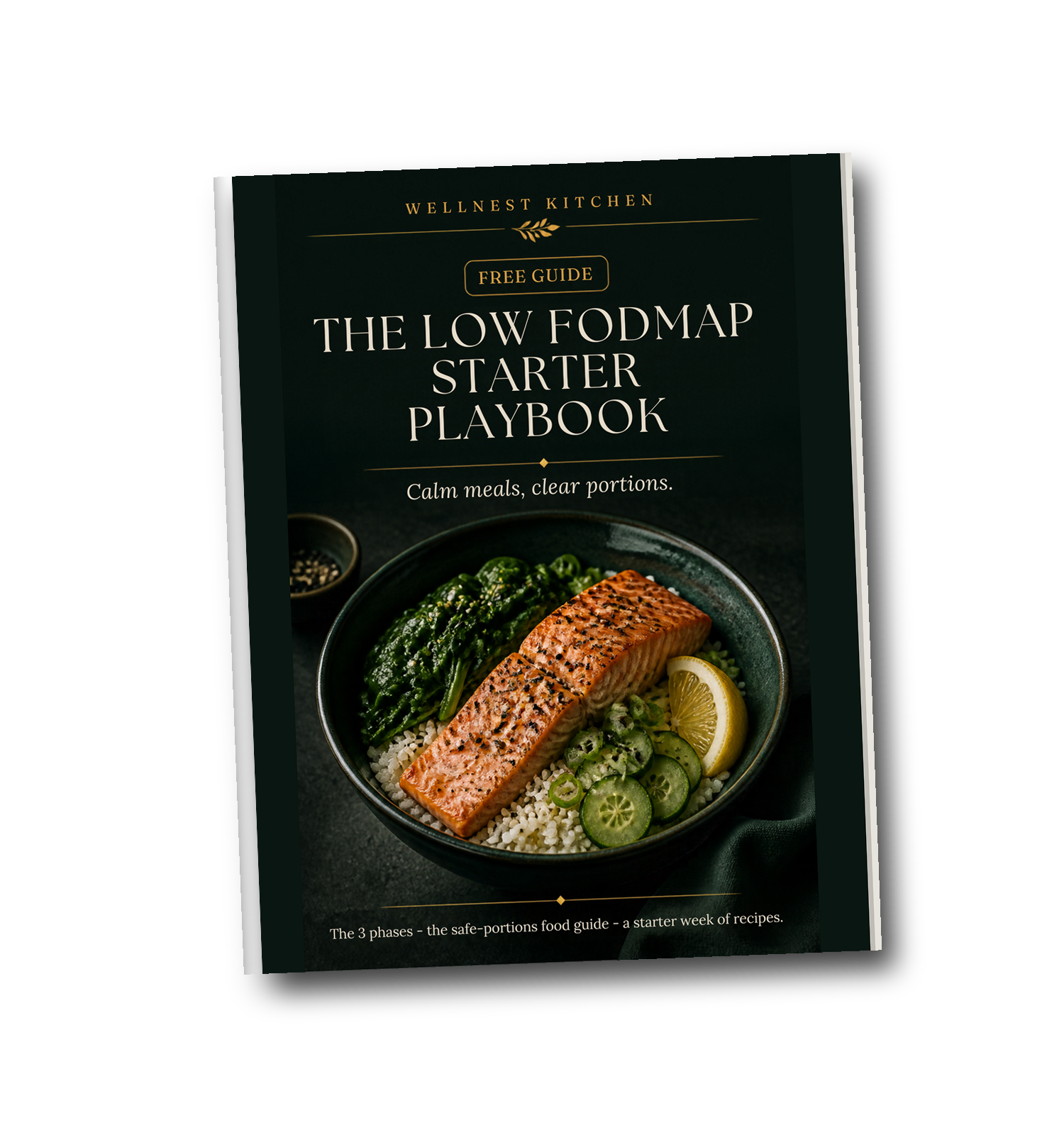
Get the Free FODMAP Ebook
Join the WellNest newsletter and get the free ebook - 109 foods rated the Monash way, 10 starter recipes with portion checks, and a simple plan for your first weeks. The full pack by email: the Low FODMAP Starter Playbook ebook + a printable food chart and a first-week grocery list. Free, always.