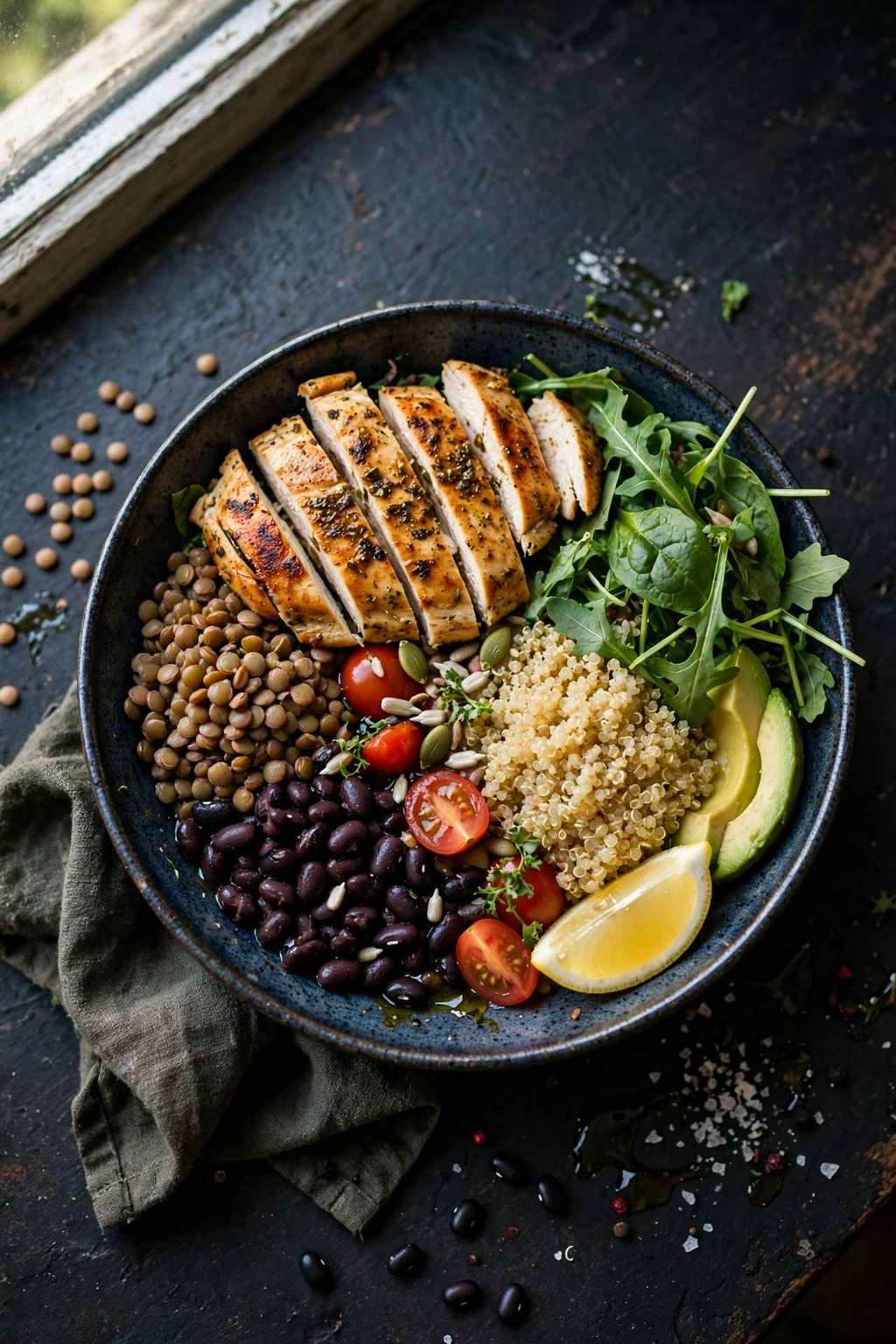
Protein alone can leave you hungry again in an hour if the meal has almost no fiber. Fiber alone can fill the plate but leave protein too low.
High fiber high protein meals fix both gaps at once. Beans, lentils, whole grains and vegetables bring the fiber. Eggs, chicken, fish, yogurt, tofu and those same beans and lentils bring the protein.
This guide gives you the targets, the best double-duty foods, and simple meals you can repeat. It also fits the GLP-1 plate idea well: smaller portions that still feel complete, with protein first and fiber for comfort.
How Much Fiber and Protein Do You Need Each Day?
High fiber high protein meals work best when you know both numbers. Protein has a daily target, and fiber has a simple daily guide.
The US Recommended Dietary Allowance for protein is 0.8 grams per kilogram of body weight per day for adults, from the National Academies. That figure is a floor, not a goal for active adults.
The International Society of Sports Nutrition, in its 2017 position stand, puts the range for most exercising people at 1.4 to 2.0 grams of protein per kilogram of body weight per day.
For fiber, USDA guidance based on the Dietary Guidelines for Americans is about 14 grams of fiber per 1,000 calories eaten. At 2,000 calories a day, that is about 28 grams of fiber.
Not sure of your protein number? Our free Protein Calculator works it out from your weight, activity and goal in seconds.
A practical split helps: aim for 20 to 40 grams of protein and 7 to 10 grams of fiber at each main meal. Three meals built that way land close to both targets.
What Foods Are High in Both Fiber and Protein?
The best foods for high fiber high protein meals do both jobs in one serving. Legumes lead this list, with seeds, oats and edamame close behind.
USDA FoodData Central lists cooked lentils at about 18 grams of protein and about 15 grams of fiber per cup, which makes lentils one of the strongest double-duty foods you can buy.
USDA FoodData Central also lists cooked black beans at about 15 grams of protein and about 15 grams of fiber per cup, and cooked chickpeas at about 15 grams of protein and about 12 grams of fiber per cup.
- Lentils - cook fast, need no soak, and work in soups, bowls and salads.
- Black beans and chickpeas - cheap, filling, and easy to add to rice, wraps and salads.
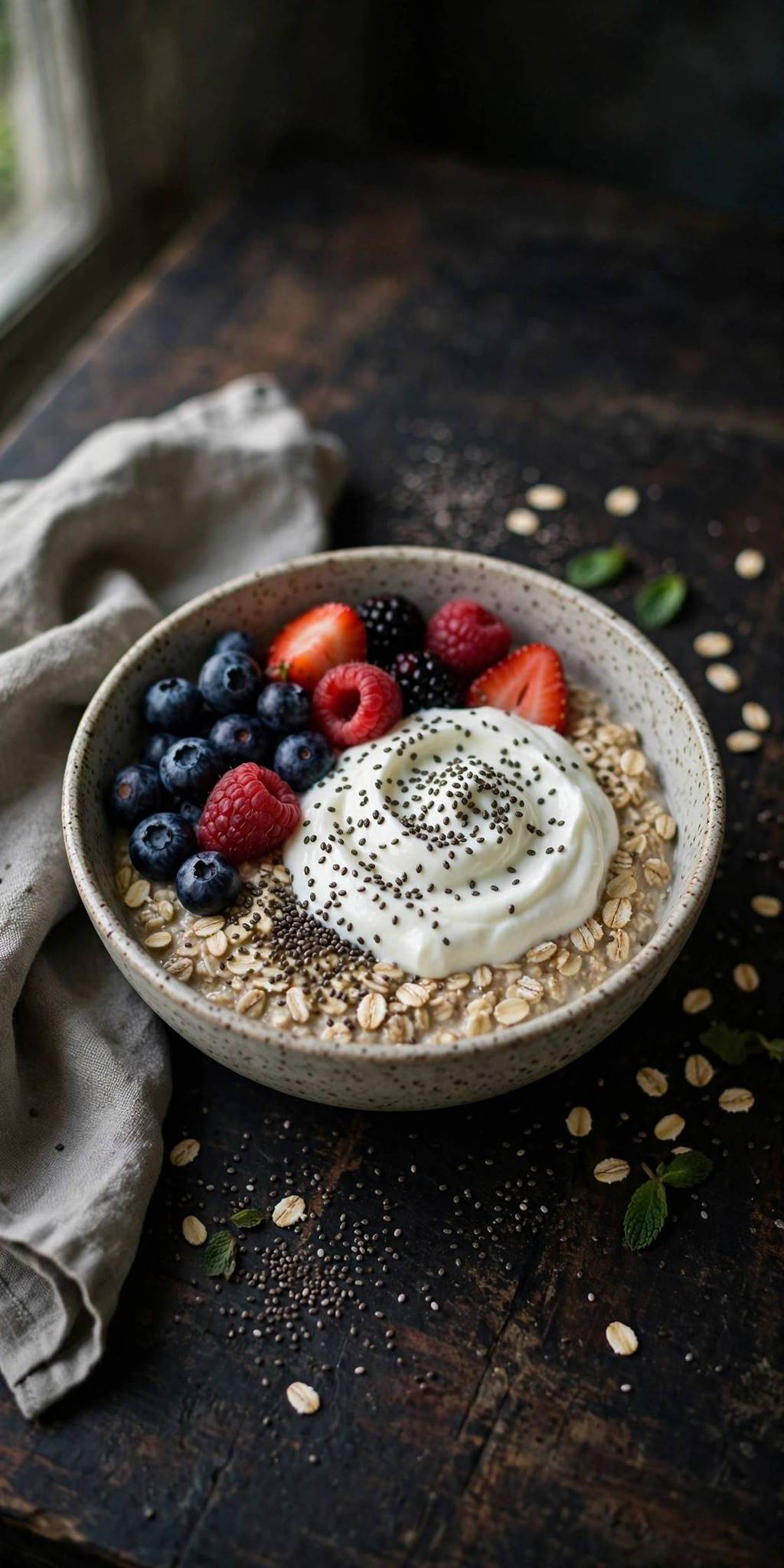
- Oats - USDA FoodData Central lists dry oats at about 5 grams of fiber and 5 grams of protein per 40 gram serving, before you add yogurt or milk.
- Chia seeds - USDA FoodData Central lists chia at about 10 grams of fiber and about 5 grams of protein per ounce, so a small spoon adds a lot of fiber.
- Edamame and tofu - plant proteins that pair well with vegetables and whole grains.
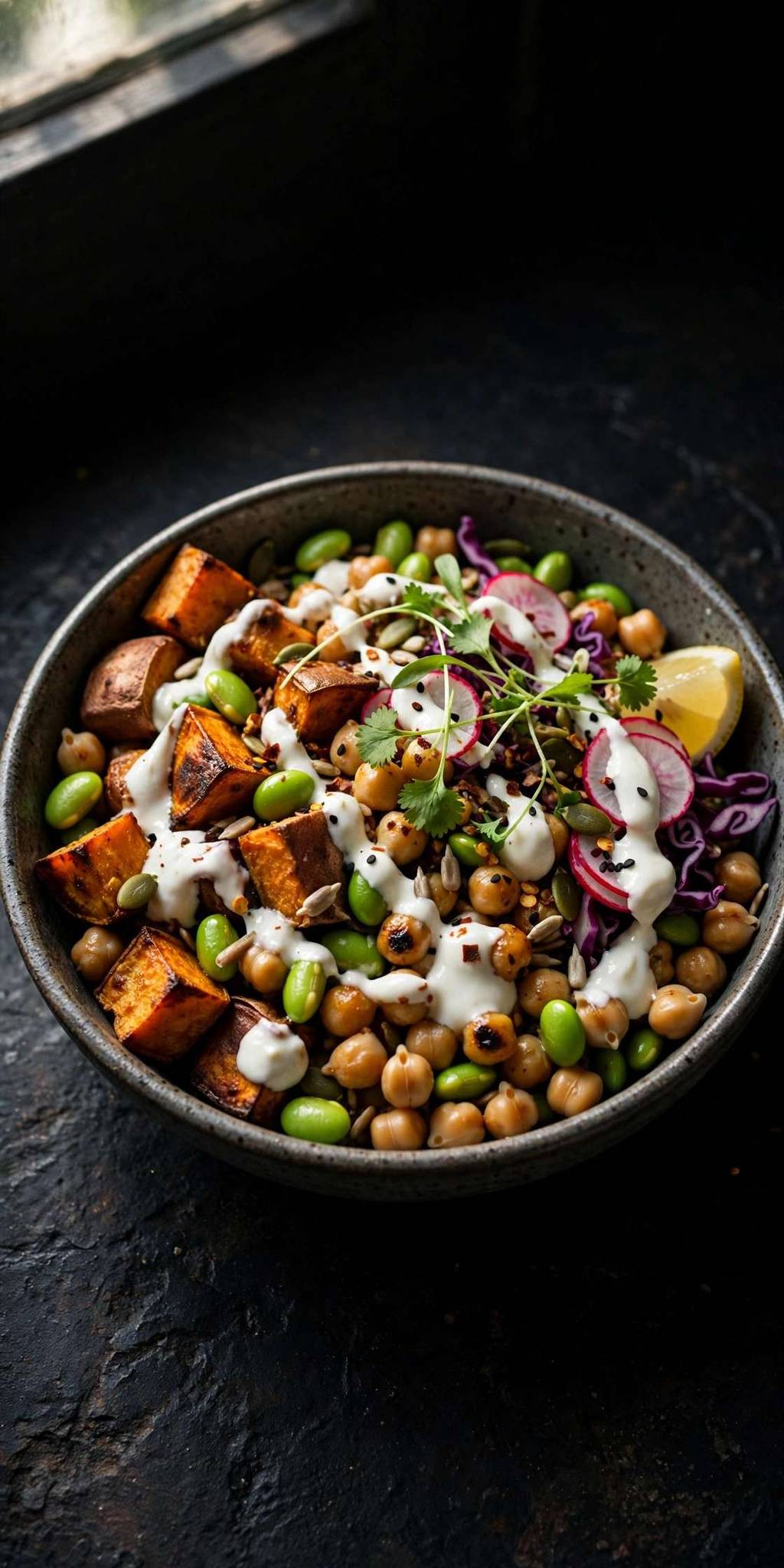
Animal proteins like chicken, tuna and Greek yogurt bring strong protein but almost no fiber. Pair them with beans, lentils, vegetables or whole grains, and the plate becomes a high fiber high protein meal.
What Are High Fiber High Protein Meals for Breakfast, Lunch and Dinner?
Simple high fiber high protein meals use one double-duty food, or one protein plus one fiber food. Here are ideas by meal, with counted WellNest recipes where they fit.
Breakfast ideas
- Oats, yogurt and chia bowl - oats and chia bring fiber, Greek yogurt brings protein. Start the day full, not heavy.
- Cottage cheese egg bake with vegetables - our cottage cheese egg bake carries 27 grams of protein per serving. Add spinach or peppers for fiber.
- Berry chia pudding plus an egg - our berry chia pudding is a fiber-rich base. Pair it with eggs or yogurt to lift the protein.
Lunch ideas
- Tuna white bean smash - our tuna white bean smash carries 24 grams of protein per serving, and the white beans add the fiber tuna lacks.
- Greek yogurt chicken salad with apple and greens - our Greek yogurt chicken salad carries 39 grams of protein. Serve it over greens or with whole grain bread for fiber.
- Lentil soup with a yogurt swirl - lentils do both jobs, and yogurt lifts protein and makes the bowl feel complete.
Dinner ideas
- Tofu and edamame stir-fry with brown rice - our tofu edamame stir-fry carries 24 grams of protein, with vegetables and rice for fiber.
- Chicken, black bean and quinoa bowl - chicken for protein, black beans and quinoa for fiber and extra protein.
- Chickpea and vegetable curry with rice - chickpeas, tomatoes and spinach in one pot, easy to make ahead.
For the simpler protein-only pattern, see our easy high protein meals guide. This post adds the fiber half to that same pattern.
What Does a Sample High Fiber High Protein Day Look Like?
A sample day does not need perfect numbers. It needs each meal to carry real protein and a clear fiber source.
| Meal | Idea | Why it works |
|---|---|---|
| Breakfast | Oats, chia, Greek yogurt and berries | Oats and chia for fiber, yogurt for protein |
| Lunch | Tuna White Bean Smash | 24 g protein, beans for fiber |
| Snack | Crispy Roasted Chickpeas | 8 g protein, chickpea fiber, crunchy and portable |
| Dinner | Chicken, lentil and quinoa bowl with greens | Three protein sources, lentils and greens for fiber |
That pattern spreads fiber across the day, which is gentler than one very high fiber dinner. It also spreads protein, so no single meal has to be huge.
How Do You Add Fiber Without Upsetting Your Stomach?
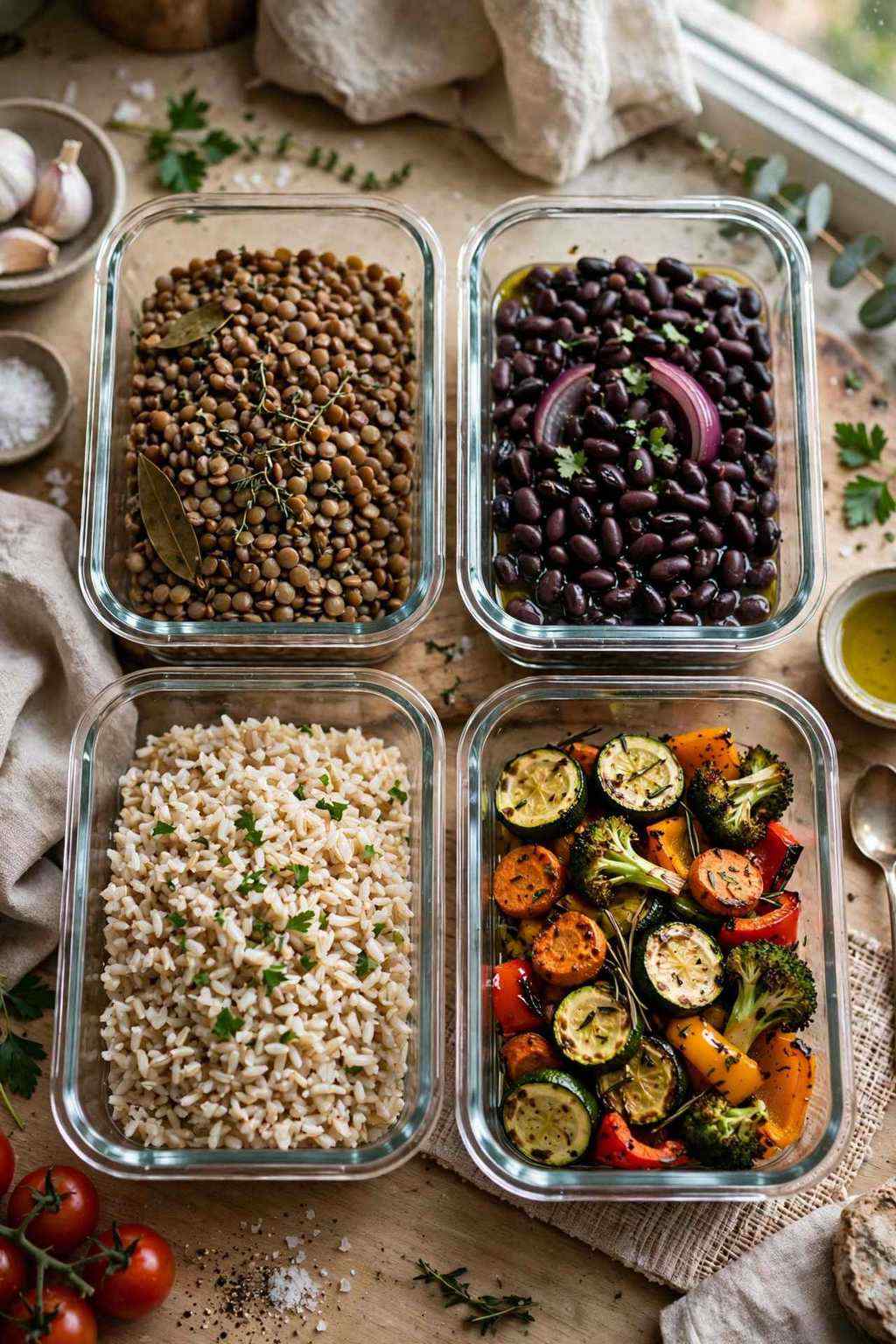
Adding fiber fast is the most common mistake with high fiber high protein meals. Your gut needs time to adjust, even when the foods are good for you.
- Go slowly - add one fiber-rich meal a day for the first week, then build up.
- Drink water - fiber works with fluid. Keep water near you through the day.
- Cook legumes well - soft lentils and beans are usually easier than firm ones.
- Spread it out - a little fiber at each meal beats a lot at once.
If fiber changes cause ongoing pain or big changes in digestion, stop and talk to your clinician or dietitian. General tips are not a diagnosis.
Want the Week Planned for You? Meet the Protein-First Planner
Tell it your weight and goal, get a 7-day week that hits your number
The ideas above work one meal at a time. The slow part is turning them into a full week that adds up to your target, with swaps and a grocery list. The Protein-First Planner calculates your protein target from your weight, activity and goal, then builds a 7-day week, or a simple one-day plan, that hits it. Add your fiber foods from this guide to those plates, and both targets are covered.
What it does for you
- Your protein target, calculated from your weight, activity and goal, with the maths shown - or type in a number from your clinician.
- A 7-day week or a one-day Hit Your Number plan, built from 56 verified meals, with a per-day scoreboard.
- Protein-preserving swaps and protein rescue add-ons, so a changed meal or a short day does not sink the week.
- A vegetarian filter, calorie bands including a 1200-Calorie Mode, a merged grocery list, and print views.
Good to know
- It costs $19 once, with no subscription. Your data stays on your device, with no account.
- It is a planning tool, not a medical service - it cannot diagnose anything or replace advice about your own health.
High fiber high protein meals come down to a simple pairing: a strong protein plus a real fiber source, at every meal. Start with lentils, beans, oats and chia, add the proteins you already like, and build up slowly. When you want the protein half planned for the whole week, the Protein-First Planner does the target, the plan, the swaps and the grocery list in one pass.
Questions, answered
How much fiber and protein do you need each day?
For protein, the National Academies set the general adult allowance at 0.8 grams per kilogram of body weight per day, and many active adults aim higher. For fiber, USDA guidance based on the Dietary Guidelines is about 14 grams per 1,000 calories eaten, which is about 28 grams a day at 2,000 calories.
What foods are high in both fiber and protein?
Lentils, black beans, chickpeas, edamame, oats and chia are strong on both. USDA FoodData Central lists cooked lentils at about 18 grams of protein and about 15 grams of fiber per cup, and cooked black beans at about 15 grams of protein and about 15 grams of fiber per cup.
Can high fiber high protein meals help you feel full?
They can help many people feel full for longer, because protein and fiber both slow down a meal and add bulk. That is general information, not a promise. Portions, sleep, activity and your own health all play a part.
How do you add fiber without upsetting your stomach?
Add fiber slowly over one to two weeks, drink water through the day, and spread fiber across meals instead of loading it all at dinner. If beans or lentils are new for you, start with a small portion and build up.
Are high fiber high protein meals right for everyone?
Not automatically. If you have a gut condition, kidney disease, are pregnant, or follow a clinician-set diet, talk to your clinician or dietitian before changing your fiber or protein target.
Want the WellNest tools in one place? Start here ->
More from WellNest
- Easy High Protein Meals: 15 Fast Ideas + Sample Day - fast protein meals with short lists and a 115 gram sample day.
- High Protein Meal Plan: Targets, Sample Day + Week - set your number first, then build the week around it.
- Keto Grocery List: Shop by Section + Net Carbs - the keto shop walked in store order, with net carbs per serving.
- Keto Food List: What to Eat, Limit + Net Carbs - foods in three groups, with net carbs per serve from USDA data.
Got 3 ingredients? Find your recipe
Tell the free WellNest Recipe Finder the 3 ingredients you already have, and it matches you to a real recipe from our verified library. Your match comes with the free finder signup - a fresh 3-ingredient idea in your inbox every week.
 FREE
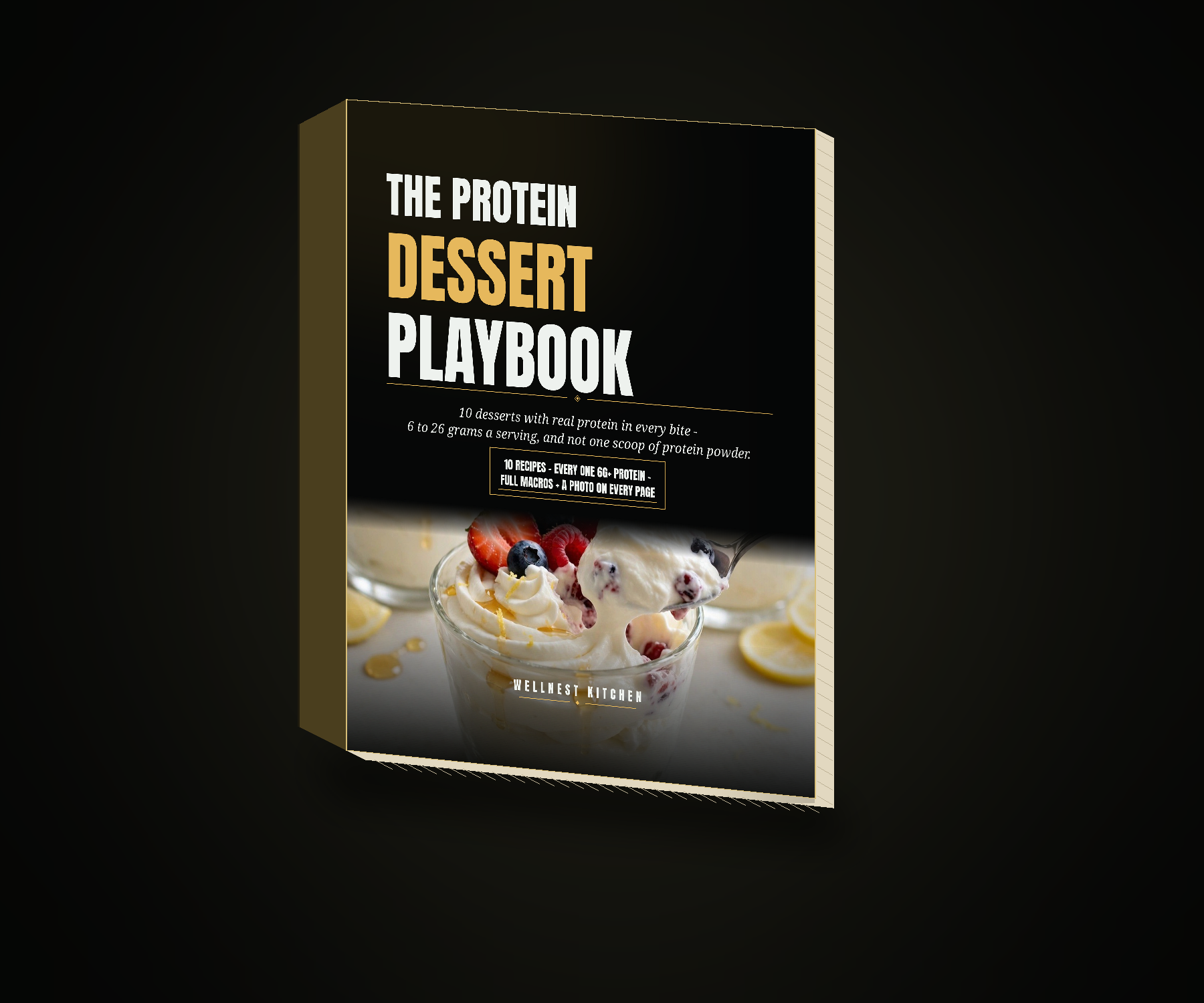
Get the Free Protein Dessert Ebook
10 desserts with 6 to 26 grams of protein in every serving - Greek yogurt, cottage cheese and real food, not one scoop of protein powder. Free, in your inbox in about a minute.