
Your prescriber writes the prescription. Then the pharmacy names a price that can top $1,000 for one month.
Many people pay it, or give up, without ever seeing the lower price the same manufacturer offers direct.
This guide maps the real routes: list price, manufacturer self-pay, insurance with a savings card, and compounded offers, with the traps in each one.
How Much Does a GLP-1 Cost Per Month at List Price?
At list price, a GLP-1 costs about $1,000 to $1,350 a month in the US, before any insurance, coupon or program is applied.
Published wholesale acquisition cost (WAC) figures, the list prices reported from Novo Nordisk and Eli Lilly pricing, put Ozempic at about $1,028 a month, Wegovy at about $1,349 a month, Zepbound at about $1,086 a month, and Mounjaro at about $1,080 to $1,112 a month.
| Medicine | Approved for | List price / month | Manufacturer self-pay / month |
|---|---|---|---|
| Wegovy (semaglutide) | Weight management | About $1,349 | Pen $349; pill $149-$299 |
| Ozempic (semaglutide) | Type 2 diabetes | About $1,028 | Pen $349, or $499 at 2 mg |
| Zepbound (tirzepatide) | Weight management | About $1,086 | $299-$449 by dose |
| Mounjaro (tirzepatide) | Type 2 diabetes | About $1,080-$1,112 | $499 flat, all doses |
List price is the starting point for insurance negotiations. It is rarely the lowest cash price available, which is why the route you buy through matters more than the drug's sticker.

What Is the Most Affordable GLP-1 Through the Manufacturer?
The most affordable GLP-1 route for cash payers is usually the manufacturer's own self-pay pharmacy, where FDA-approved medicine runs $149 to $499 a month instead of list price.
Novo Nordisk's NovoCare Pharmacy lists the Wegovy pen at $349 a month for self-pay patients at most doses, the Ozempic pen at $349 a month up to 1 mg and $499 at 2 mg, and new patients pay $199 a month for their first two starter fills through December 31, 2026.
Eli Lilly's LillyDirect program lists Zepbound at $299 a month for the 2.5 mg starter dose, $399 at 5 mg, and $449 a month at 7.5 mg and above when refills land within 45 days, while Mounjaro sits at $499 a month at every dose on LillyDirect.
Oral options sit at the low end: NovoCare lists the Wegovy pill at $149 a month for the starter dose and $199 to $299 a month at maintenance doses.
- Lowest FDA-approved entry point: the Wegovy pill at $149 a month at the starter dose, if your prescriber chooses it.
- Lowest weekly pen: Zepbound at $299 a month at the starter dose on LillyDirect.
- Flat and simple: Wegovy and Ozempic pens at $349 a month at most doses on NovoCare.
One limit applies to both programs: manufacturer self-pay cannot be combined with insurance, Medicare or Medicaid. It is a cash route, and it needs a valid prescription.
How Can Insurance and Savings Cards Lower the Price?
With commercial insurance that covers the drug, a manufacturer savings card can lower a GLP-1 copay to as little as $25 a month for eligible patients.
Both Novo Nordisk and Eli Lilly run savings cards on that $25 pattern. The catch is eligibility: your plan must cover the drug first, and the cards do not work with Medicare or Medicaid.
- Step 1: ask your plan if your drug is covered for your approved use, and at what copay.
- Step 2: if it is covered, apply for the maker's savings card before your first fill.
- Step 3: if it is not covered, compare the manufacturer self-pay price above with your cash price at the pharmacy.
Coverage for weight management is the patchiest part. A drug approved for type 2 diabetes is covered far more often than the same kind of drug prescribed only for weight loss.
Are Compounded GLP-1s a Safe Way to Save Money?
Compounded GLP-1s can cost less, but compounded products are not FDA-approved, and the price gap that once made them the obvious cheap route has narrowed a lot.
The US Food and Drug Administration (FDA) declared the semaglutide shortage resolved in February 2025 and the tirzepatide shortage resolved in December 2024, which ended the period when pharmacies could make large volumes of copies of these drugs.
The FDA has also warned that some products sold as semaglutide use salt forms, semaglutide sodium or semaglutide acetate, that have not been shown to be safe and effective.
Reported compounded prices often run $150 to $400 a month once visit and shipping fees are added. Against a $349 brand-name self-pay pen, that saving is now small, and it comes with a product no regulator has approved as a finished medicine.
Our honest read: if a compounded offer is your only workable route, raise it with your prescriber, confirm a licensed clinician prescribed it and a licensed pharmacy fills it, and never buy a GLP-1 sold without a prescription.
Where Do People Overpay on a GLP-1?
People overpay on a GLP-1 in predictable places. Five show up again and again:
- Paying list price at a retail pharmacy without checking the manufacturer's self-pay price for the same drug.
- Skipping the savings card when commercial insurance already covers the drug - the $25 route needs an application, not luck.
- Missing the refill window: LillyDirect's $449 Zepbound maintenance price needs a refill within 45 days; miss it and the same dose can cost $499 to $699.
- Budgeting the starter price forever: starter offers end and higher doses cost more, so month 4 rarely costs what month 1 cost.
- Paying telehealth fees on top of near-brand prices for a compounded product, when the FDA-approved self-pay route costs about the same.
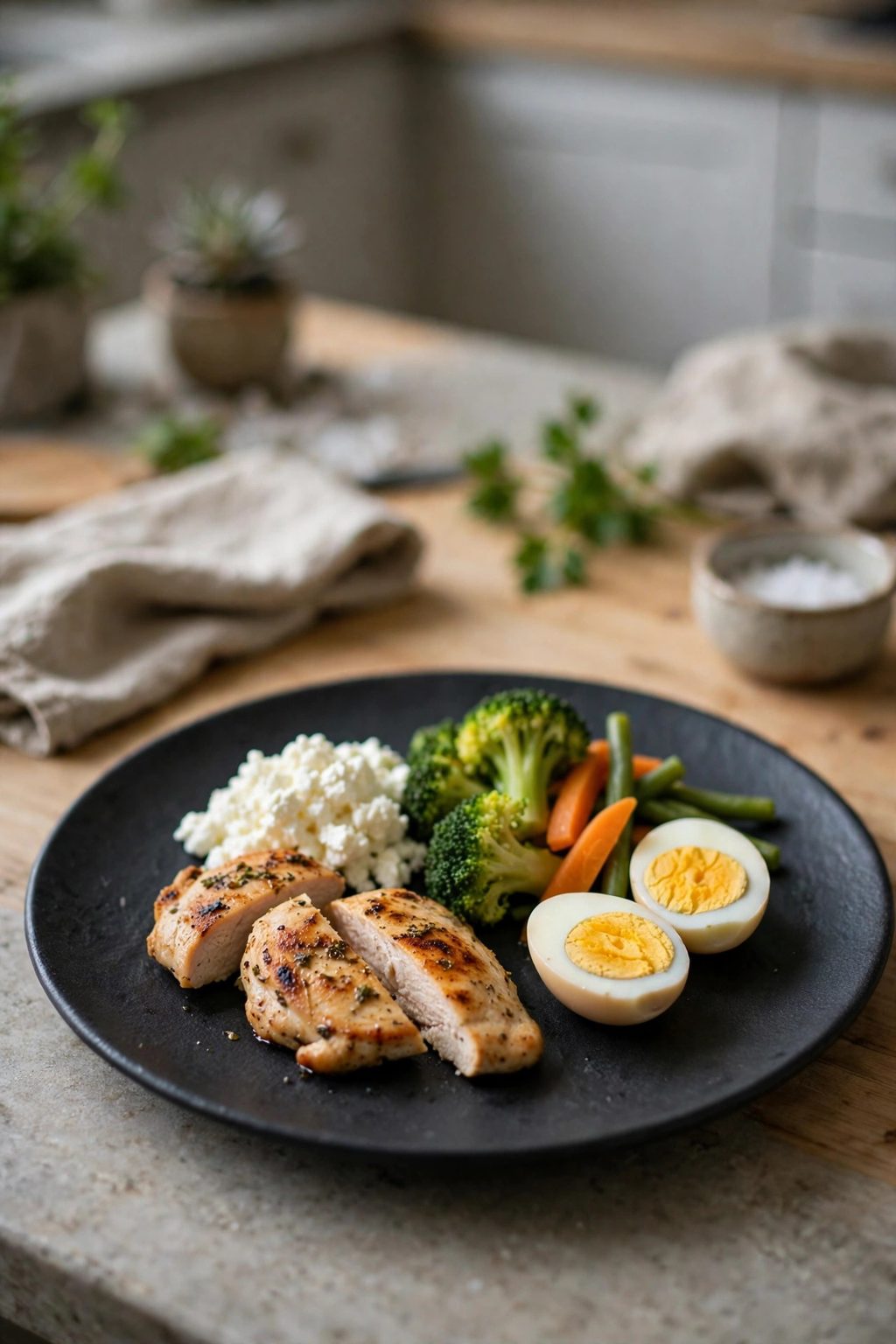
The food side matters to cost too. Our GLP-1 diet plan and the guide to how much protein on a GLP-1 show how to hit your protein target on smaller meals, and our free Protein Calculator works out your personal number.
What Hidden Costs Sit on Top of the Medication Price?
On top of the medication price, a GLP-1 month can carry prescriber visit fees, telehealth membership charges, and higher protein food costs.
- Visits: some telehealth routes charge a monthly membership plus the medication; others charge per visit. Add them before comparing prices.
- Dose steps: most people step up doses over the first months, and tiered prices step up with them.
- Food: protein-first eating on a small appetite can raise the grocery bill slightly, even as total food volume falls.
- Time: tracking doses, symptoms and refills is real work, and missed refills can cost the program price, as the 45-day rule shows.

Want the First 90 Days Mapped for You? Meet First 90 Days
A guided 90-day companion for the first three months on a GLP-1
The medication price is only month one of the real cost. The first 90 days also bring dose steps, side-effect weeks and refill timing that can raise what you pay if they catch you off guard. First 90 Days builds a personal 13-week roadmap from your medication and start date, so the expensive surprises are flagged before they land.
What it does for you
- A personal 13-week roadmap built from your medication and start date, with dose-increase weeks flagged in advance.
- A 60-second daily check-in and a symptom pattern view set against your dose steps, so you can see what changed and when.
- A food-first relief playbook for nausea, constipation, reflux, sulfur burps, fatigue and hair shedding, plus a red-flag page for symptoms that need your prescriber.
- A plateau module and a printable 90-day doctor report you can take to your appointment.
Good to know
- It costs $39 once, with no subscription. It does not sell or discount medication, and it cannot change your prescription price.
- It is a planning and tracking tool, not a medical service - dose and medication choices stay with your prescriber.
Two Small Supports
First 90 Days above is the main tool. These two items just support the routine, and they are secondary.
Digital kitchen food scale
Protein targets are easier to hit when portions are honest. A small scale lets you weigh chicken, yogurt and cottage cheese for the first weeks, then eyeball with confidence. We read many real Amazon customer reviews before listing this pick. Check the current price before you buy.
Check price on AmazonWeekly medication organizer
A simple weekly organizer keeps vitamins and daily pills sorted beside a weekly injection routine, so nothing gets doubled or missed on shot day. Check the current price before you buy.
Check price on AmazonThe most affordable GLP-1 is rarely the first price you are quoted. Check the manufacturer's self-pay price, use a savings card if your insurance covers the drug, watch the refill and dose-step rules, and treat compounded offers with care. When you want the first three months planned around those dates and costs, First 90 Days maps them week by week. If nausea is already shaping your food choices, our guide to Ozempic foods to avoid may help you eat more comfortably.
Questions, answered
What is the most affordable GLP-1 without insurance?
For FDA-approved medicine, the manufacturer self-pay pharmacies are usually the lowest route. NovoCare lists most Wegovy and Ozempic pens at $349 a month and the pill at $149 to $299, and LillyDirect lists Zepbound from $299 a month by dose. Which one is cheapest for you depends on the drug your prescriber chose.
Can a savings card really bring a GLP-1 to $25 a month?
Yes, for eligible patients with commercial insurance that covers the drug. Both Novo Nordisk and Eli Lilly offer savings cards that can bring an eligible copay down to as little as $25 a month. The cards do not work with Medicare or Medicaid, and each card has its own rules and end dates, so check the current terms.
Are compounded GLP-1s a safe way to save money?
Compounded GLP-1s are not FDA-approved as finished products, and the FDA declared the semaglutide shortage resolved in February 2025, which ended the period when pharmacies could make large volumes of copies. Some compounded offers are close in price to the $349 brand-name self-pay price now. Talk to your prescriber before choosing any compounded product.
Why did my GLP-1 price go up after a few months?
Dose increases are the usual reason. Zepbound rises from $299 at the starter dose to $449 at maintenance doses on LillyDirect, and the Ozempic pen rises to $499 at the 2 mg dose on NovoCare. Starter offers also end: the $199 NovoCare price covers only the first two fills for new patients.
What should you budget on top of the medication price?
Budget for the prescriber visits your plan requires, any telehealth membership fee, and the food side: smaller, protein-first meals. A simple tracker for doses, symptoms and costs helps too. First 90 Days covers the tracking side for $39 once, with no subscription.
The Whole Nest is here. All 11 WellNest planners, trackers and protein tools in one home - yours to keep, under one key. See The Whole Nest ->
More from WellNest
- GLP-1 Diet Plan 2027: Protein-First Plan for the New Year - the same protein-first plan set up as a new-year reset, with a sample 99 g day.
- High Protein Meal Plan: Targets, Sample Day + Week - set your protein number first, then build meals that add up to it.
- GLP-1 Diet Plan: What to Eat + a Protein-First Week - what to eat on a GLP-1, with a gentle shot-day pattern and a 99 g sample day.
- How Much Protein on a GLP-1? - your daily protein target, and how to reach it when your appetite is small.
- Ozempic Foods to Avoid: 9 That Can Worsen Nausea - the foods that can worsen nausea and fullness, and the gentle swaps that may sit better.
Got 3 ingredients? Find your recipe
Tell the free WellNest Recipe Finder the 3 ingredients you already have, and it matches you to a real recipe from our verified library. Your match comes with the free finder signup - a fresh 3-ingredient idea in your inbox every week.
 FREE
Get the Free GLP-1 Ebook
Join the WellNest newsletter and get the free ebook - your protein number, shot-day and daily-pill food plans, and your first 7 days. The full pack by email: the GLP-1 Protein Playbook ebook + a printable protein food list and a shot-day sample menu. Free, always.