Free baking tool
Sourdough Calculator
Most sourdough calculators get hydration wrong, because they treat your starter as one mystery ingredient. This one splits the starter into its flour and water - the way bakers actually do the math - then works out your water, starter, salt, and batch size. Free, instant, no sign-up.
Product images were created with AI.
The flour you add - not counting the flour inside your starter.
The finished dough weight you want - flour, water, starter, and salt included.
20% is the standard. More starter = faster, tangier fermentation.
100% = fed equal flour and water. Stiff starters sit near 50%.
Your recipe
For 1 loaf
Will it work?
| Ingredient | Baker's % |
|---|---|
| Total flour | 100% |
| Total water | - |
| Starter | - |
| Salt | - |
Planning a calmer week around bread like this?
The Low FODMAP Meal Planner Pro builds your whole week from 52 already-checked low FODMAP meals - swap anything, and the grocery list writes itself. One payment, yours forever.
Build My 7-Day Plan - $19 →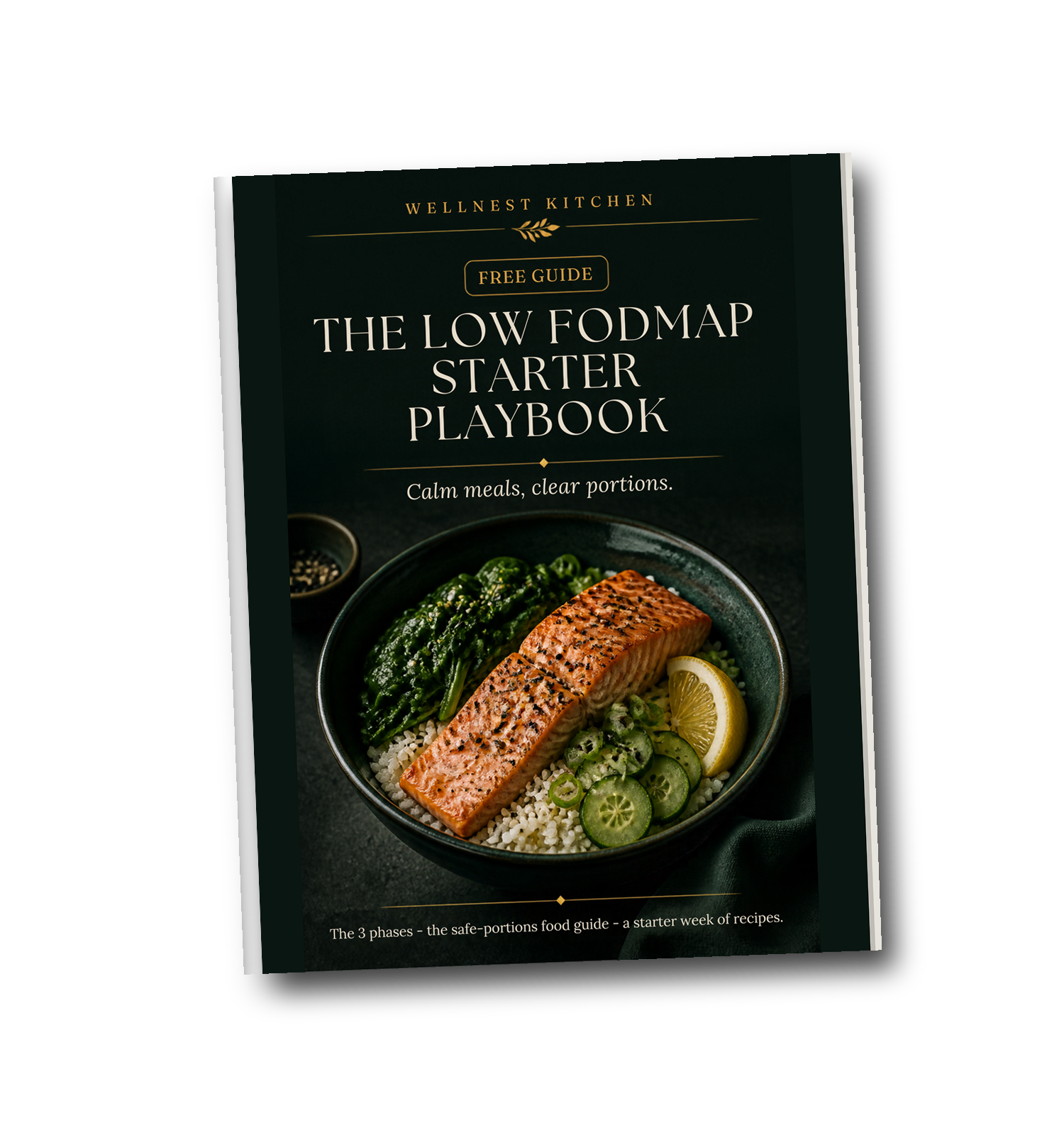 FREE
Eating low FODMAP? Get the free ebook.
The Low FODMAP Starter Playbook - the 3 phases, a safe-portions food guide, and a starter week of recipes, in one free ebook from WellNest Kitchen.
Get the free ebookFree. In your inbox in about a minute.
Why "true hydration" is the number that matters
Hydration sounds simple - water divided by flour. The catch is your starter: it is not a third ingredient, it is flour and water that already started fermenting. A typical 100%-hydration starter is exactly half flour, half water. If a calculator ignores that split, its "75%" loaf is quietly a different dough than you planned.
Here is the difference with real numbers. Say 500 g of flour, 100 g of starter, and a 75% target. The simple math says add 375 g of water (75% of 500). But your starter already brought 50 g of flour and 50 g of water, so the true totals are 550 g flour and 425 g water - a 77.3% hydration dough, wetter and stickier than intended. This calculator works backwards from the true totals: it tells you to add about 363 g of water, so the finished dough really is 75%. Two or three points of hydration is the difference between a dough that shapes cleanly and one that spreads across the counter.
Salt is calculated on total flour (including the starter's flour), which is the convention in most bakery formulas - so a 2% salt loaf tastes seasoned the same whether your starter is stiff or liquid.
Sourdough and your gut
There is a real reason sourdough has a gentler reputation than a fast yeasted loaf. During the long, slow fermentation, the starter's bacteria feed on the flour's fructans - the FODMAP most likely to cause bloating from bread - and break much of them down before the loaf is even baked. In Monash-style guidance, slow-fermented sourdough tests low FODMAP at about 2 slices, which is why it appears as a "low" entry for that portion in our FODMAP food chart.
Honest limits: fermentation reduces fructans, it does not erase them, and a long-fermented loaf is not the same as a quick "sourdough-style" loaf from the supermarket. Portions still matter, and tolerance is personal. If bread is one of your trigger foods, start with a slice or two of a genuinely slow-fermented loaf and see how you do. For more, browse our low FODMAP recipes and the gut health guides.
How long will bulk fermentation take?
The two levers are starter percentage and kitchen temperature. These are rough planning windows for the dough to rise about 50-75% - always judge by the dough (domed, jiggly, with bubbles at the edges), not the clock:
| Kitchen | At 20% starter | What changes it |
|---|---|---|
| Cool - 18°C / 65°F | about 8-12 hours | Good for an overnight counter ferment |
| Mild - 21°C / 70°F | about 6-9 hours | The average home kitchen |
| Warm - 24°C / 75°F | about 4-6 hours | Watch it from hour 3 |
| Hot - 27°C / 80°F | about 3-4.5 hours | Easy to over-proof - check early |
Using 10% starter stretches these windows by roughly half again; 30% starter shortens them by about a third. A cold fridge pauses fermentation almost completely, which is why most bakers shape, then proof overnight in the fridge for a morning bake.
The one tool this math cannot do without
Baker's percentages only work by weight - a cup of flour can be off by 30 g either way, which moves hydration more than the starter split does. The Etekcity EK6015 digital kitchen scale reads to 1 g up to 5 kg, so flour, starter, water, and salt all happen on one scale. It is the scale we point every WellNest baker to.
See it on Amazon →Common questions
How do you calculate sourdough hydration?
Hydration is the total water in the dough divided by the total flour, times 100. Total means everything: the water you add plus the water inside your starter, over the flour you add plus the flour inside your starter. A 100%-hydration starter is half flour and half water, so 100 g of starter adds 50 g of each to those totals.
What hydration is best for beginners?
Start at 65-70%. Dough in that range is soft but still easy to shape, forgiving about timing, and gives a moist crumb. Once your loaves come out consistent, move toward 72-75% for a more open crumb - and expect the dough to feel noticeably stickier with every step up.
How much starter do I need for sourdough?
20% of the flour weight is the standard starting point - 100 g of starter for 500 g of flour. More starter (25-30%) ferments faster and tastes tangier sooner; less (10-15%) slows fermentation down, which builds flavor and can fit better around a workday. Warm kitchens ferment faster at any percentage.
What is the difference between a stiff and a liquid starter?
It is just the starter's own hydration. A liquid starter is fed equal weights of flour and water (100% hydration). A stiff starter is fed more flour than water - often around 50% hydration - which slows it down and leans the flavor more acidic. This calculator handles both: set your starter hydration and it splits the starter into flour and water correctly either way.
Does the starter count toward hydration twice?
No - it counts once, split in two. The flour inside the starter joins the total flour and the water inside it joins the total water. The mistake simple calculators make is ignoring the split entirely (treating starter as a third ingredient), which can throw the real hydration off by 2-3 points - enough to change how the dough handles.
Is sourdough easier on the gut than regular bread?
For many people, yes. The long, slow fermentation lets the starter's bacteria break down much of the fructans in the flour - fructans are the FODMAP most likely to cause bloating from bread. Slow-fermented sourdough tests low FODMAP at about 2 slices in Monash-style guidance. It is not a free pass: big portions still add up, and tolerance is individual.
Check any ingredient against the low FODMAP chart before it goes in the bowl, and convert cups to grams without the guesswork.
Open the free FODMAP Food Chart →