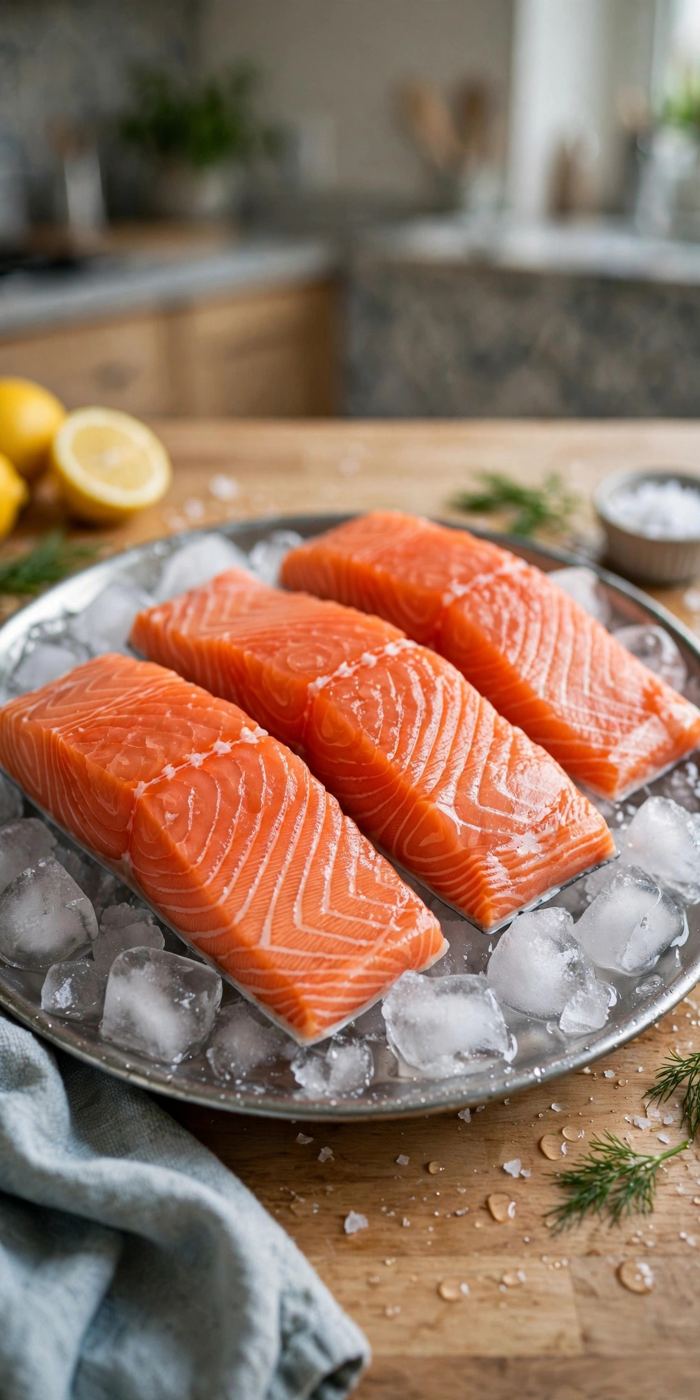
How long does salmon last in the fridge, and why so short?
One to two days. That is the whole window for raw salmon in the fridge, per the USDA FoodKeeper guide.
Salmon is a fatty fish, and fatty fish ages faster than lean fish like cod. The oils that make salmon rich also turn rancid sooner, and bacteria grow on fresh fish quickly even at fridge temperature.
The FoodSafety.gov cold food storage chart gives fatty fish, salmon included, 1 to 3 days in the fridge and 2 to 3 months in the freezer. FoodKeeper is tighter at 1 to 2 days, so plan on the short end: cook it the day you buy it, or the next day.
The practical rule: buy salmon for tonight or tomorrow, or freeze it the day you buy it. Write the buy date on the pack so day 2 is never a guess.
How do you tell if salmon has gone bad?
Use smell, color, and feel. And one firm rule: never taste salmon to check if it is safe.
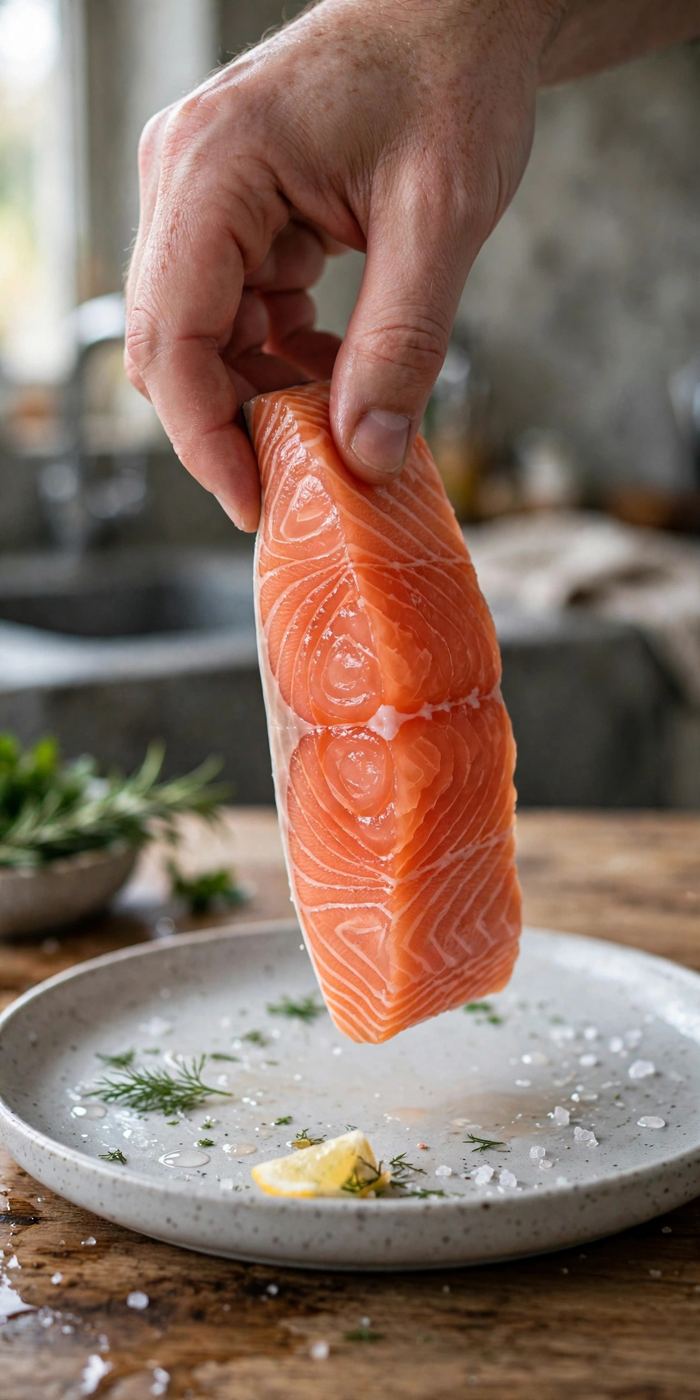
Smell. Fresh salmon smells mild, like the sea. A sour, ammonia-like, or strongly fishy smell means the fillet goes, even inside the 1 to 2 day window.
Color. Fresh fillets are bright pink or orange with clean white lines. Dull, gray, or brown patches, or a milky film on the surface, mean it is done.
Feel. Fresh salmon is firm and springs back when pressed. A slimy surface, or flesh that stays dented and falls apart, is a clear spoilage sign.
Count the days first. Past day 2 for raw salmon, do not bother with the other checks. Bacteria can grow without changing the smell, so the calendar wins.
Food safety notes for salmon
- Keep the fridge at 40F or below. The USDA puts the danger zone between 40F and 140F, where bacteria grow fast.
- Two hours out is the limit. Salmon left at room temperature for more than 2 hours should be thrown out - 1 hour if the day is over 90F.
- Cook salmon to 145F. The USDA and FDA safe minimum for fish is 145F, checked with a food thermometer in the thickest part; the flesh should flake and look opaque.
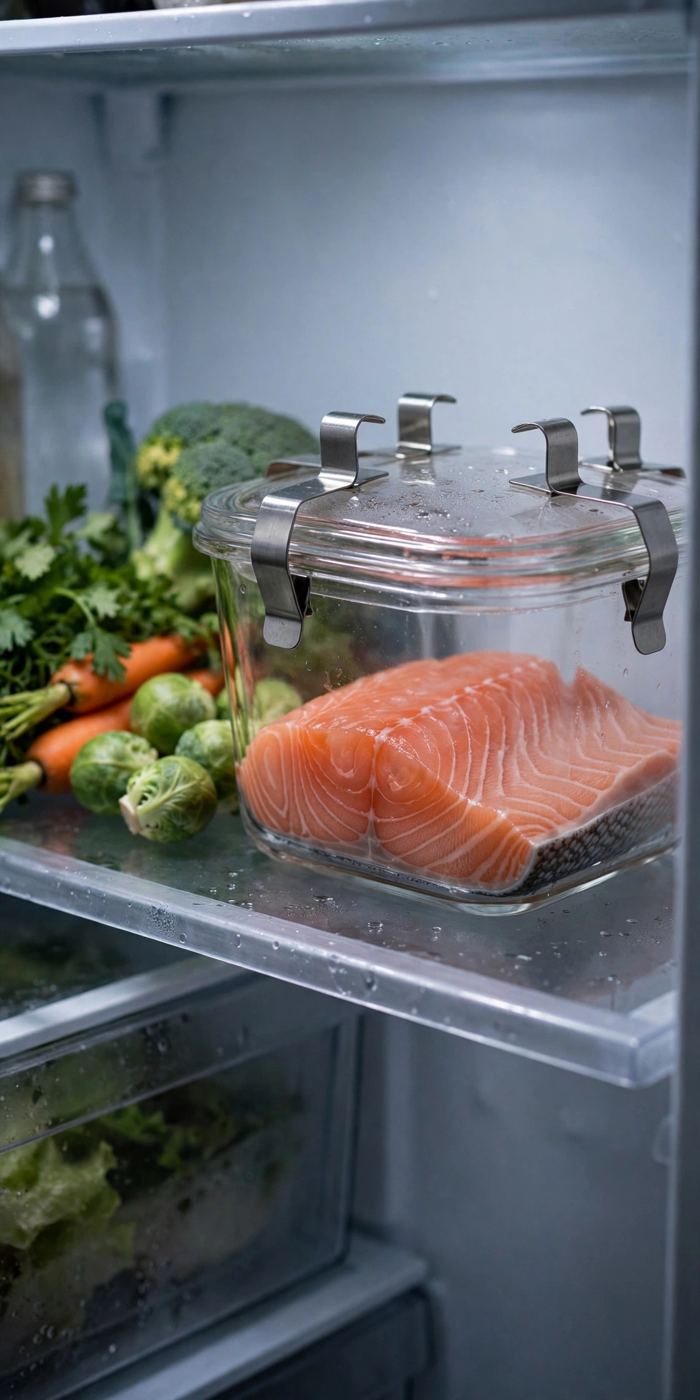
- Store it low and sealed. Raw fish can drip, so keep it on a low shelf or in a sealed container, away from ready-to-eat food.
- Cool cooked salmon fast. Leftovers go into a sealed container in the fridge within 2 hours, and they get 3 to 4 days.
- Thaw frozen salmon in the fridge. Overnight is fine, or under cold running water in its sealed bag. Never thaw fish on the counter.
- When in doubt, throw it out. One fillet is never worth food poisoning. Cooking does not make spoiled salmon safe.
Use salmon before it goes
Bought salmon on Monday and dinner plans changed? Freeze it today, while it is at its freshest, instead of on day 2. Or cook it tonight and eat the leftovers within 3 to 4 days.
Two WellNest recipes are built on salmon:
- Salmon Patties - crisp patties that work with fresh or leftover cooked salmon; a good day-2 plan for a fillet you need to use.
- Lemon Herb Salmon with Crispy Potatoes - a full dinner built around fresh fillets, best cooked the day you buy them.
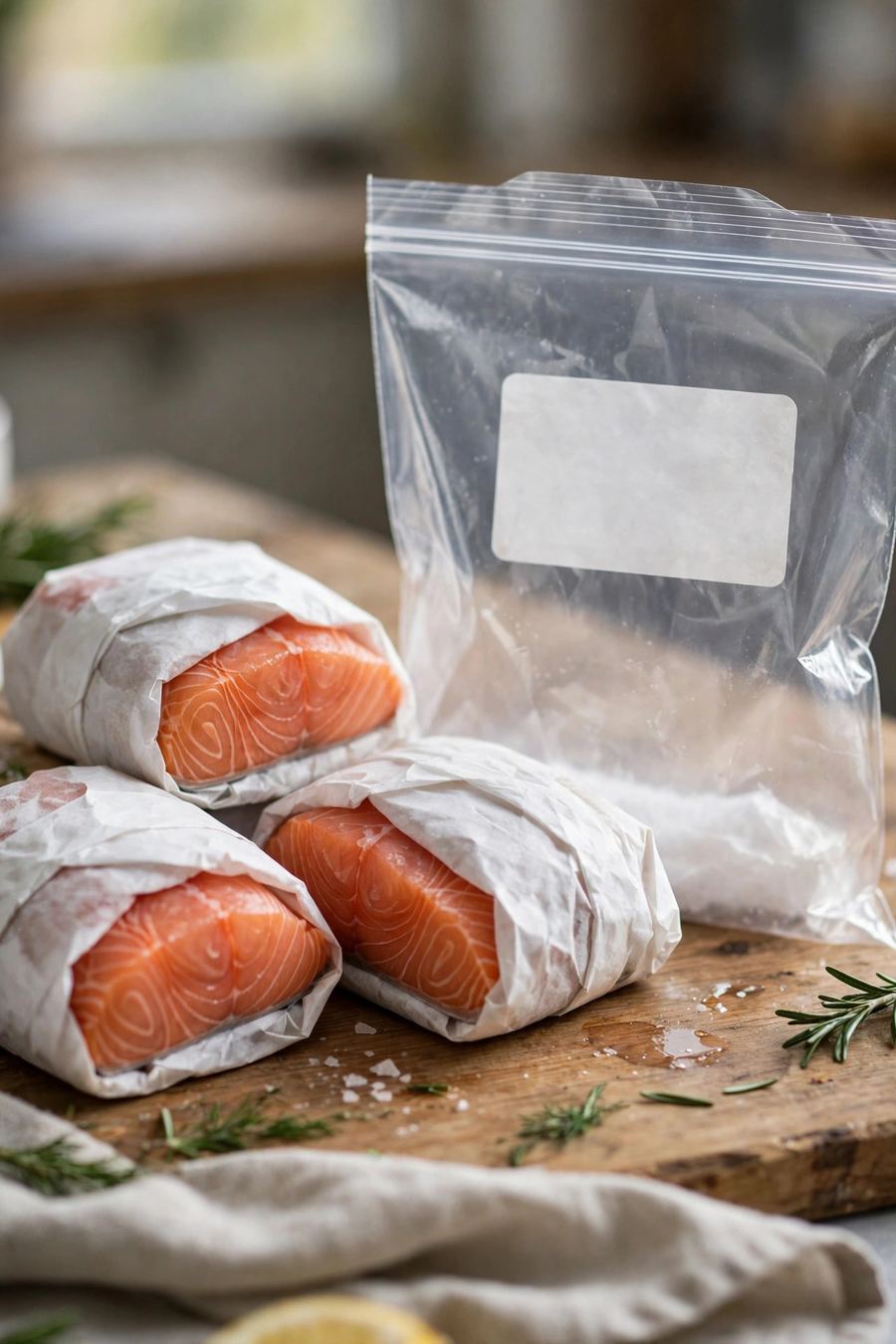
Freezing a big pack? Wrap each 4-ounce (113 gram) portion on its own. Single portions thaw fast and you only open what you need.
Don't have salmon on hand? Find the exact substitute here ->
Keep salmon fresh longer
The move that buys you the most time costs nothing: freeze what you will not cook by tomorrow, while it is at its freshest, instead of freezing it at the end of day 2.
For freezing, a vacuum sealer is the upgrade that matters most for fish. Buyers of home vacuum sealers say the air-free seal stops freezer burn and keeps frozen fish tasting fresh far longer than a plain bag. Seal portions flat, label the date, and use within 2 to 3 months.
Home vacuum sealer for fish portions
Best for: freezing salmon portions with no freezer burn
Look for a sealer with a moist-food setting and bags rated for the freezer. Pat each portion dry, seal it flat, and write the date on the bag. Use within 2 to 3 months for best quality.
Check price on AmazonQuestions, answered
Can you freeze salmon?
Yes. Raw salmon keeps 2 to 3 months in the freezer at 0F or below for best quality, per the USDA FoodKeeper guide. Wrap portions tight in freezer paper or a vacuum bag with the air out, and label the date. Thaw in the fridge overnight and cook within 1 to 2 days.
How do you know if salmon is bad?
Check smell, color, and feel. Salmon that smells sour or strongly fishy, looks dull or gray, or feels slimy should be thrown out. Count the days first: raw salmon gets 1 to 2 days in the fridge per the USDA, and past that window it goes out even if it looks fine. Never taste it to check.
What happens if you eat expired salmon?
You risk food poisoning - stomach cramps, diarrhea, fever, and vomiting. Bacteria can grow on salmon in the fridge once the 1 to 2 day window passes, and cooking does not make spoiled fish safe. When in doubt, throw it out.
How long does cooked salmon last in the fridge?
Cooked salmon lasts 3 to 4 days in the fridge in a sealed container, and 1 to 2 months in the freezer for best quality, per USDA guidance. Cool it and refrigerate leftovers within 2 hours of cooking, and reheat to 145F before eating.
Storage times sourced from the USDA Food Safety and Inspection Service: the FoodKeeper guide and the FoodSafety.gov cold food storage chart for fatty fish.
The Whole Nest is here. All 11 WellNest planners, trackers and protein tools in one home - yours to keep, under one key. See The Whole Nest ->
More from WellNest
- Keto Food List: What to Eat, Limit + Net Carbs - salmon sits in the eat-freely group at 0 g carbs; the full keto list with net carbs per serve.
- How Long Does Sandwich Meat Last in the Fridge? - opened packs and deli sliced meat get 3 to 5 days in the fridge per the USDA, plus the spoilage signs to trust.
- How Long Does Ground Beef Last in the Fridge? - raw ground beef gets just 1 to 2 days in the fridge per the USDA, plus the spoilage signs to trust.
- How Long Does Cooked Chicken Last in the Fridge? - cooked chicken lasts 3 to 4 days in the fridge per the USDA, plus the spoilage signs to trust.
- How Long Do Eggs Last in the Fridge? - eggs last 3 to 5 weeks in the fridge per the USDA, plus the float test truth.
Got 3 ingredients? Find your recipe
Tell the free WellNest Recipe Finder the 3 ingredients you already have, and it matches you to a real recipe from our verified library. Your match comes with the free finder signup - a fresh 3-ingredient idea in your inbox every week.
 FREE
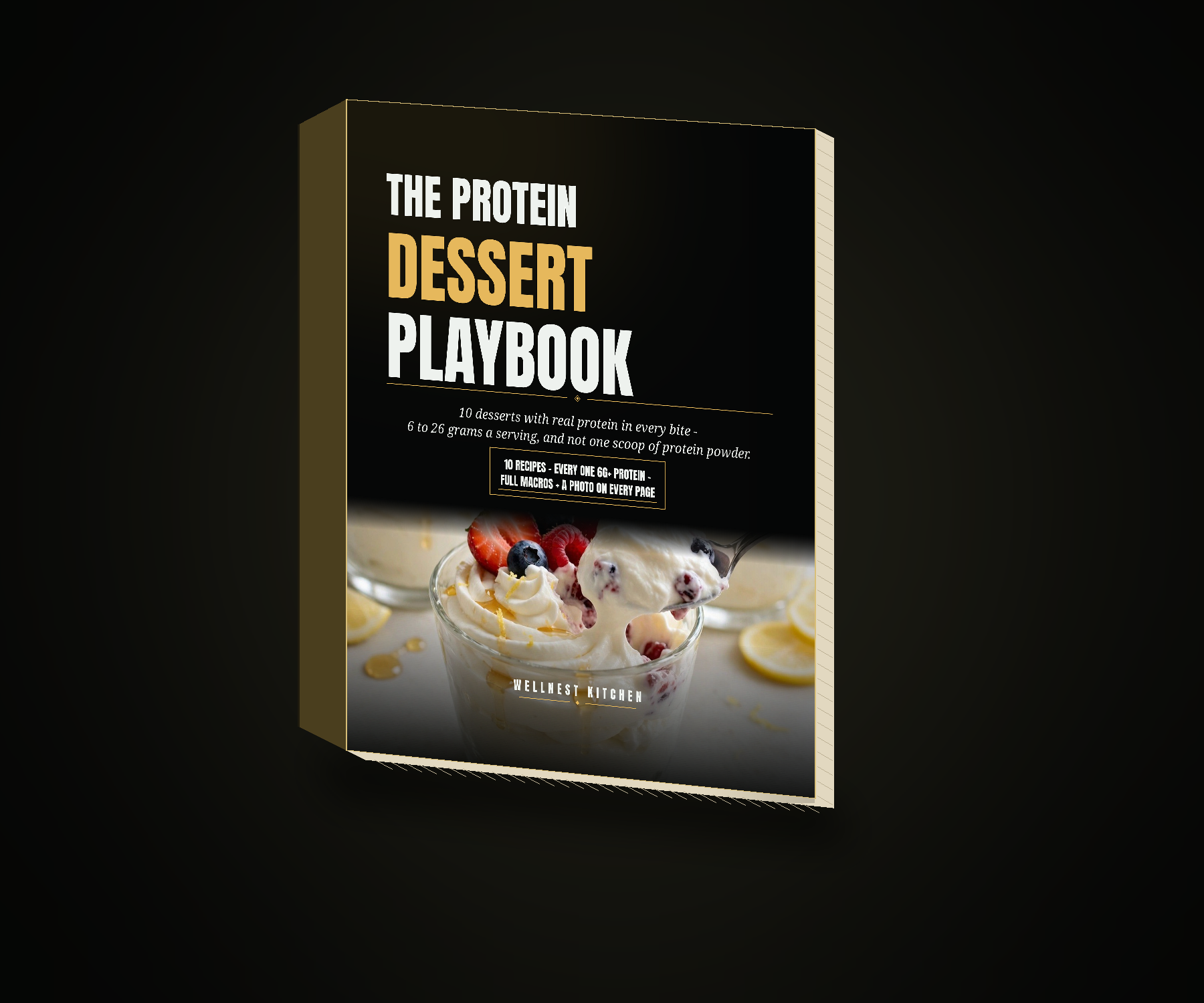
Get the Free Protein Dessert Ebook
10 desserts with 6 to 26 grams of protein in every serving - Greek yogurt, cottage cheese and real food, not one scoop of protein powder. The full pack by email: the Protein Dessert Playbook ebook + a printable pack with the 10 desserts ranked by protein, a starter grocery list and a 3-day dessert plan. Free, in your inbox in about a minute.